
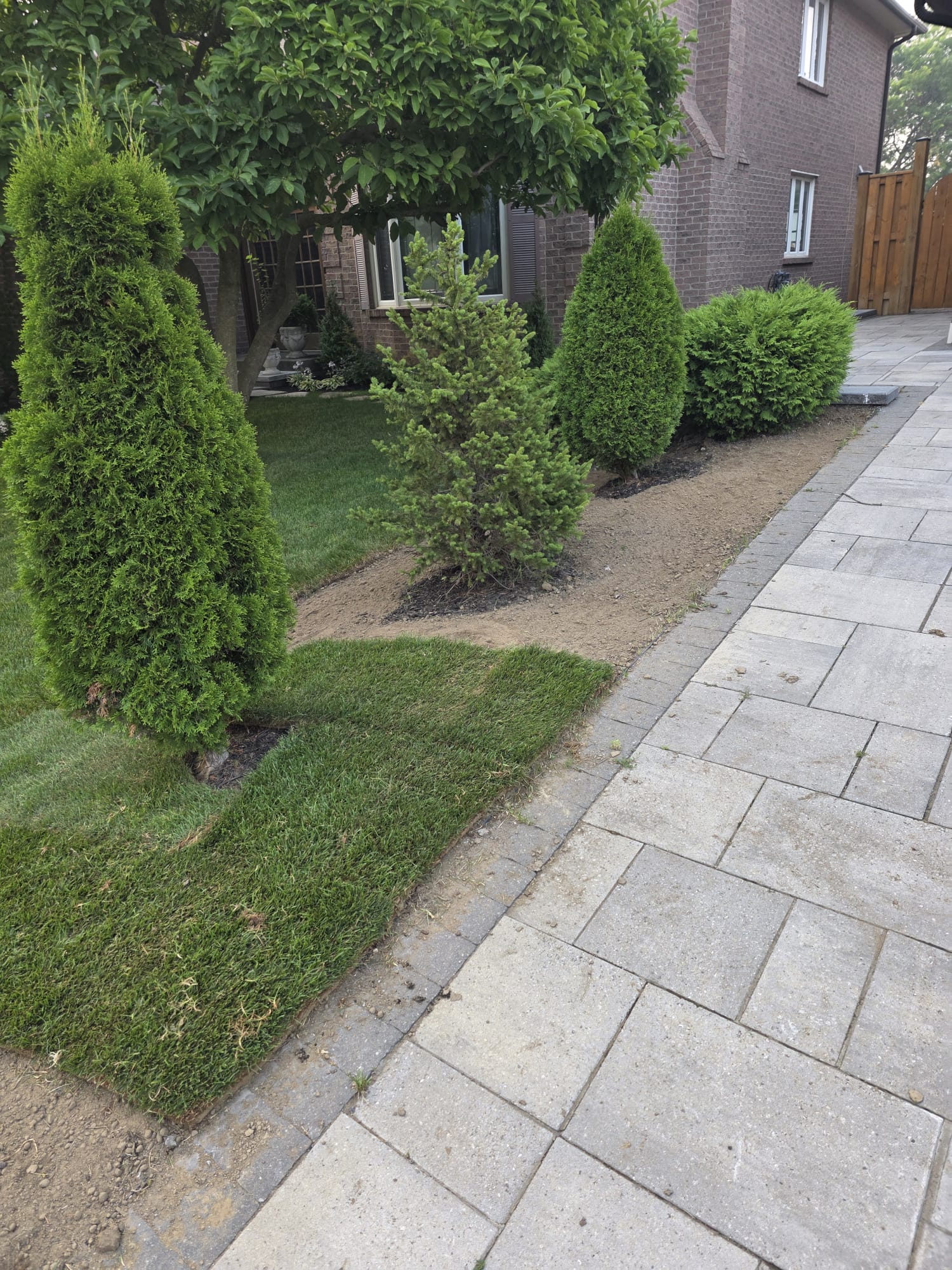
New Sod Care Guide: Your Complete First 90 Days
Congratulations on your new lawn! This guide covers everything from the day your sod goes down through your first 90 days of care — watering, mowing, fertilizing, and how to tell normal settling from a real problem. Follow it and your sod will root strong within 2-3 weeks, and stays covered by our take-root guarantee the whole way.
Week 1-2: The Critical Period
Watering
Water your new sod 2-3 times per day for the first two weeks. Each watering should be about 10-15 minutes. The goal is to keep the soil underneath moist but not waterlogged — if you notice a sour smell or the ground feels mushy underfoot, you’re watering too much, not too little (see our overwatering diagnosis guide).
Best times to water: early morning (6-8am), midday (12-2pm), and late afternoon (4-6pm). Avoid watering after dark — it promotes fungal growth and, in poorly-drained spots, rot.
Walking on New Sod
Avoid walking on your new sod as much as possible for the first 2 weeks. The roots need time to establish into the soil. Light foot traffic is OK for watering, but keep kids, pets, and heavy equipment off.
Week 3-4: Establishing Roots
After two weeks, reduce watering to once per day, but water more deeply — about 20-30 minutes per session. This encourages roots to grow deeper instead of staying near the surface.
To check if roots are establishing, gently tug a corner of the sod. If it resists, the roots are taking hold. Some yellowing during this stretch is normal transplant stress; a sour smell or slimy texture is not — that signals overwatering rather than settling.
First Mowing
Set your mower to the highest setting for the first cut. Never remove more than one-third of the grass blade length at a time. Keep your mower blade sharp — dull blades tear the grass and stress new sod.
Weeks 5-12: Ongoing Lawn Care
Watering Schedule
After the first month, transition to a deep watering 2-3 times per week, adjusting down further during rainy stretches. Deep, infrequent watering is better than shallow daily watering — it encourages deep root growth and is the single best thing you can do to prevent problems in month two and three.
Fertilizing
Wait at least 4-6 weeks before applying fertilizer. Use a slow-release lawn fertilizer appropriate for Kentucky Bluegrass. Avoid weed-and-feed products on new sod — the herbicide component can stress roots that aren’t fully established yet.
Weed Control
Some weeds are normal in new sod and often disappear as the lawn thickens. Wait at least 8 weeks before applying any herbicide. If weeds persist, hand-pull them rather than using chemicals on young grass.
Signs Your New Sod Is Stressed vs. Normally Settling
New sod goes through a visible adjustment period, and not every change in color or texture is a problem. Here’s how to tell normal settling from something that needs attention:
- Slight yellowing in the first 2-3 weeks — usually normal transplant stress, especially in hot weather. Keep watering on schedule.
- Visible seams between rolls — normal at first, should knit together and disappear within a few weeks as roots spread.
- Sour or musty smell, mushy or slimy feel — not normal. This means overwatering or a drainage problem, not settling. See our rot diagnosis guide.
- Sod lifting easily with no root resistance after 3+ weeks — not normal at that stage. Call us so we can take a look.
- Uneven settling or low spots holding water — a grading issue rather than a watering issue; worth flagging to us rather than compensating with more water.
What Voids (and Doesn’t Void) Our Take-Root Guarantee
Our take-root guarantee covers sod that fails to establish under a normal, reasonable watering routine — the schedule on this page. It does not cover damage from skipping watering for extended periods, letting pets dig up or repeatedly urinate on the same spot, DIY interference like early fertilizing or herbicide use, or consistent, severe overwatering that causes rot. A drainage or grading problem with the lot itself is different, and it’s exactly the kind of thing we check for and correct before installation — if you’re ever unsure which situation you’re in, call us before you guess.
Care Guide FAQ
How often should I water new sod?
Water new sod 2-3 times per day for the first two weeks, keeping the soil underneath consistently moist. After two weeks, reduce to once daily with deeper watering. After one month, transition to 2-3 deep waterings per week.
When can I mow new sod?
Wait at least 2-3 weeks before mowing new sod. The roots should be established enough that the sod resists when gently tugged. Set your mower to the highest setting for the first cut and never remove more than one-third of the blade length.
When can I fertilize new sod?
Wait 4-6 weeks after installation before applying fertilizer to new sod. Use a slow-release lawn fertilizer suitable for Kentucky Bluegrass. Avoid weed-and-feed products on newly installed sod.
Is yellow new sod normal?
Slight yellowing in the first 2-3 weeks is usually normal transplant stress, especially in hot weather. Keep watering on your regular schedule. A sour smell or mushy texture is a different, non-normal problem caused by overwatering.
What voids the take-root guarantee?
Skipped or inconsistent watering, pet damage, DIY fertilizer or herbicide use before the recommended waiting period, and severe overwatering that causes rot all fall outside standard coverage. Lot drainage or grading problems are handled differently — call us if you’re unsure.
Questions About Your New Lawn?
We stand behind every installation. If something doesn’t look right, call us.
(416) 639-1794The simple watering plan that turns fresh sod into a permanent lawn.