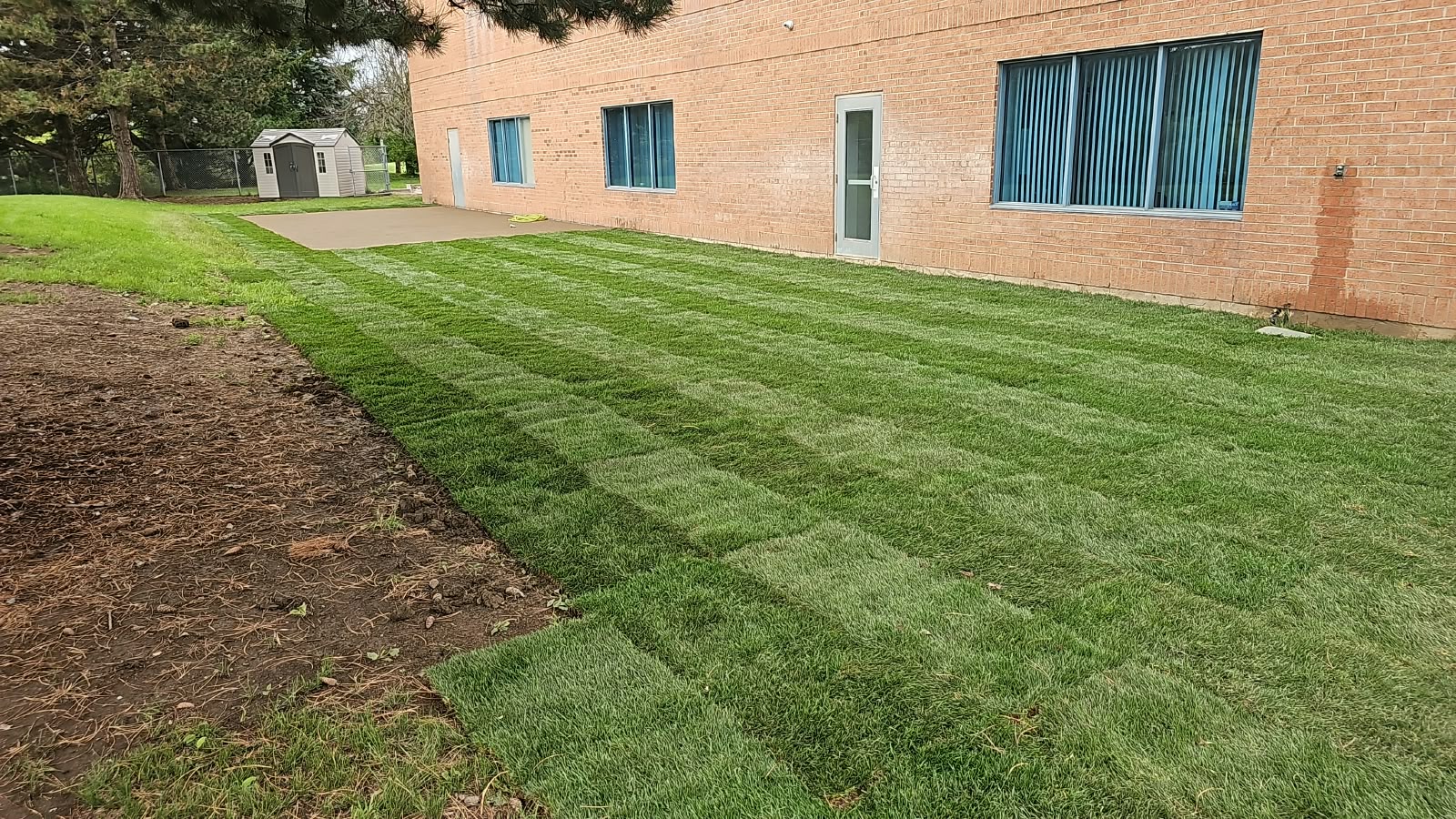
A sour, musty, or rotten-egg smell coming from new sod — especially paired with a mushy, slimy, or spongy feel underfoot — almost always means anaerobic rot from overwatering, not heat stress or normal transplant shock. It’s a different problem than sod that’s simply turning yellow or brown, and it needs a different fix: less water, not more. Here’s how to tell the two apart and what to do about it.
Is a bad smell from new sod normal?
A faint earthy smell right after installation is normal — that’s just fresh-cut turf and soil. A sour, musty, swampy, or rotten-egg smell that shows up days or weeks in is not normal. That smell is the byproduct of anaerobic bacteria breaking down organic matter in soil that’s been kept wet for too long without enough oxygen reaching the root zone.
What causes sod to smell sour, musty, or rotten
It comes down to water sitting where it shouldn’t. When soil underneath the sod stays saturated — from overwatering, poor drainage, or a low spot that collects runoff — the air pockets in the soil fill with water instead of oxygen. Roots and soil microbes that need oxygen die off, and the anaerobic bacteria that thrive without it take over, producing the sour or sulfur smell as a byproduct. This is the same basic process as a compost pile that’s been oversaturated: it goes from earthy to swampy fast.
Mushy or slimy texture: what it means
Press your hand into the sod. If it feels spongy, squishy, or leaves standing water in the footprint, the ground underneath is waterlogged. A slimy film on the grass blades or thatch layer is often a biofilm of anaerobic bacteria or algae, which thrives in the same standing-water conditions. Both signs point to the same root cause — too much water, not enough drainage — rather than a disease that needs to be treated with a fungicide.
| Symptom | Likely cause | Fix |
|---|---|---|
| Sour or musty smell | Anaerobic rot from waterlogged soil | Cut back watering immediately |
| Rotten-egg smell | Sulfur-producing bacteria in saturated soil | Stop watering, improve drainage |
| Mushy, spongy feel | Soil holding standing water underneath | Let dry out, check for low spots |
| Slimy film on blades | Bacterial or algae biofilm from standing water | Reduce watering, improve airflow |
| Yellowing without smell | Heat stress or normal transplant shock (different issue) | See our care guide watering schedule |
How to fix rotting or overwatered new sod
Stop watering on the normal new-sod schedule immediately and let the area dry out for several days, checking soil moisture by hand before resuming. If the smell is concentrated in one low spot rather than the whole lawn, that spot is likely collecting runoff from the rest of the yard or a downspout — it needs a grading fix, not just less water. Once the area has dried and the smell has cleared, resume watering on a normal schedule but reduce frequency and increase the gap between waterings, since a lawn that’s had rot once often needs less water than the standard first-two-weeks routine.
Signs it’s beyond saving vs. recoverable
Sod that’s simply saturated but still green underneath the slime, with roots that show white when you peel back a corner, usually recovers once it dries out. Sod that’s turned black, disintegrates when you tug it, or has no visible root development after the rot sets in has likely died in that section and needs to be pulled and replaced rather than nursed back. If you’re not sure which you’re looking at, that’s exactly the kind of call worth making to us before you either over-correct or give up on a section too early.
Does this void the take-root guarantee?
Our take-root guarantee covers sod that fails to establish under a normal, reasonable watering routine. Consistent, severe overwatering that causes anaerobic rot — watering well beyond what we recommend, or letting an irrigation system run on top of our schedule — falls outside that coverage, the same way letting sod dry out completely would. A drainage problem with the lot itself, like a low spot or downspout draining onto the lawn, is a different story and is exactly the kind of thing we check for and correct before installation. If you’re not sure which applies to your situation, call us — we’d rather look at it than have you guess.
How to prevent it going forward
Follow the watering schedule in our new sod care guide rather than watering “extra” to be safe — more water is not better for new sod, and it’s the single biggest cause of rot. Water in the morning rather than evening so the surface has time to dry during the day, and keep an eye out after heavy rain: if your irrigation system is still running on a fixed schedule during a rainy stretch, that’s a common way sod ends up oversaturated without anyone meaning to overwater it.
Whether your lawn is in Toronto, Richmond Hill or Mississauga, the process is the same and so is the guarantee.
Not Sure If Your New Lawn Is in Trouble?
If your new sod smells off or feels mushy, call us — we’ll help you figure out if it’s recoverable and whether it’s covered under your guarantee.
Get a Free Lawn CheckOr call us now: (416) 639-1794