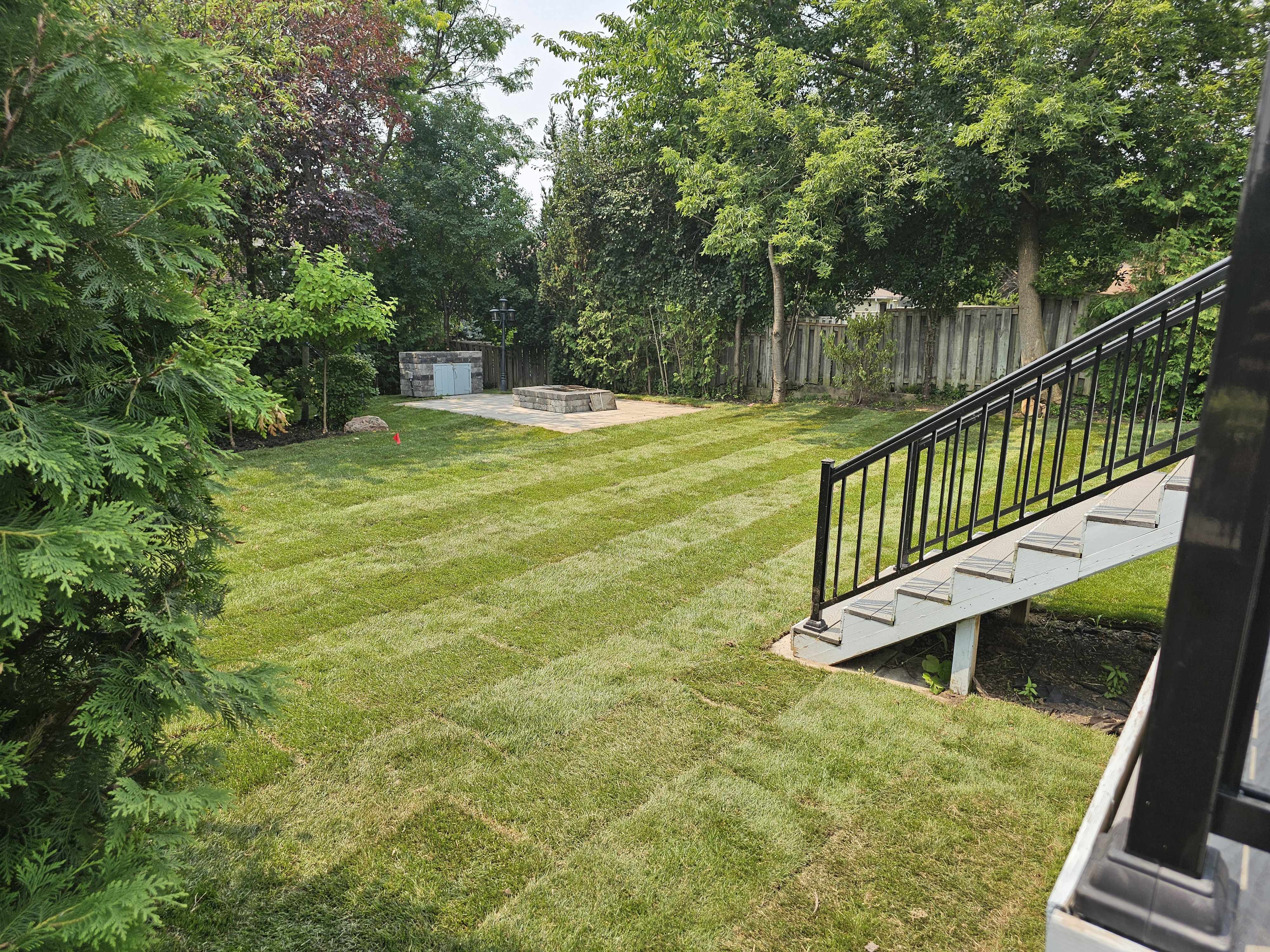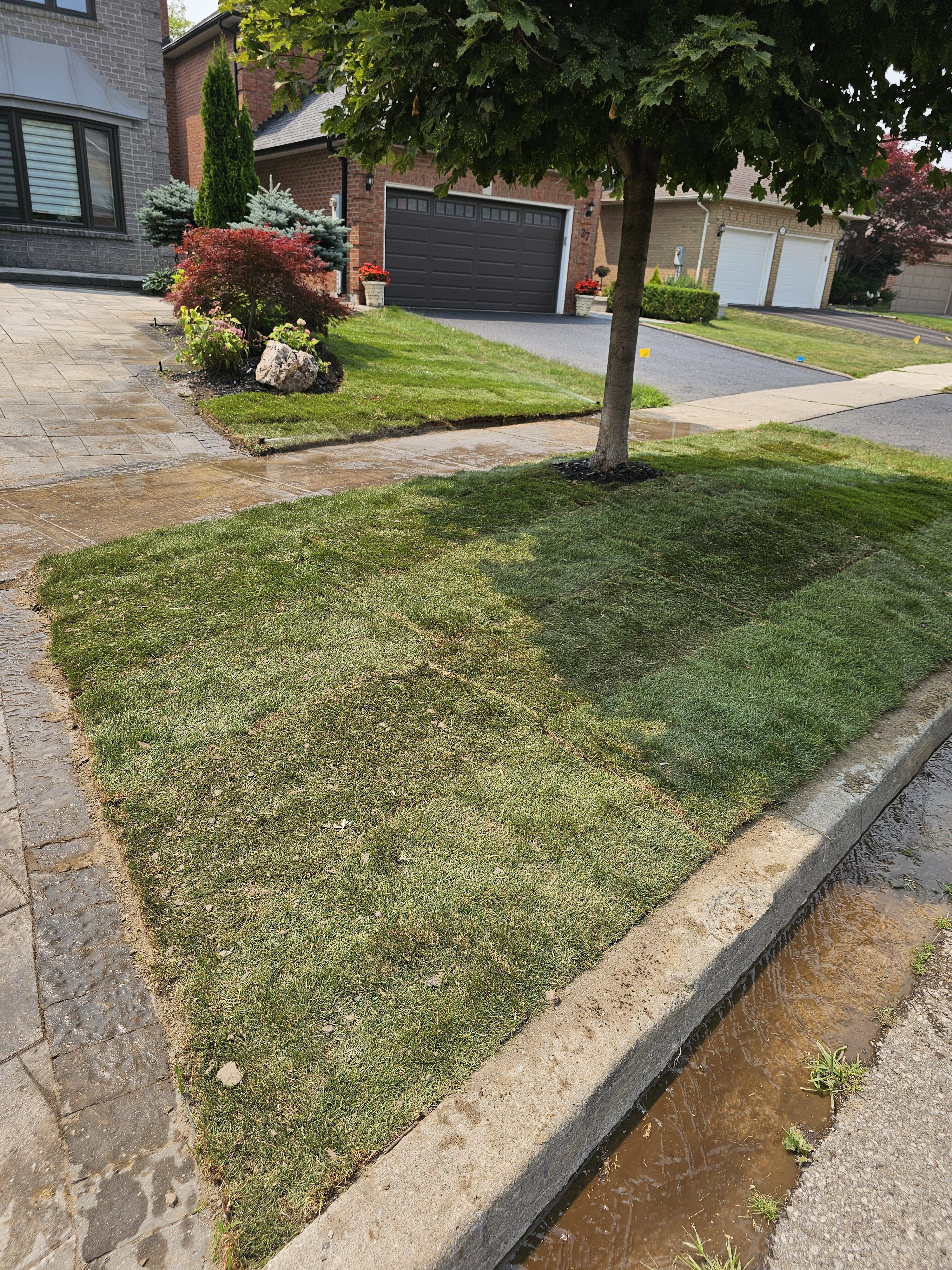
The ‘bathtub effect’ is what happens when a builder grades a new-construction lot so the yard sits lower than the foundation and driveway around it — like the inside of a bathtub. Rain has nowhere to drain, water pools against the house, and any sod or seed laid straight over that compacted, under-graded builder soil struggles or dies within a season. It’s the single most common reason a brand-new GTA lawn looks worse a year in than the day it went down. Here’s how to spot it before you sod, and what actually fixes it.
What is the ‘bathtub effect’, and why does it kill new-build lawns?
During construction, heavy equipment compacts the soil around a new home to a density close to concrete — great for foundation stability, terrible for anything trying to grow in it. Builders then often backfill and rough-grade the lot without enough attention to slope, leaving low spots where the yard sits below the level of the foundation, walkways, or driveway. Water that should run away from the house instead collects in the yard — the ‘bathtub.’ Sod laid on top of compacted, poorly-drained soil either drowns from standing water or can’t root at all because the ground underneath is too dense for roots to push into.
How to tell if your builder left your lot compacted or under-graded
Push a screwdriver or garden fork into the soil a few inches from the foundation. If it takes real effort to get more than an inch or two down, the soil is compacted. Next, watch the yard after a heavy rain: standing water that takes more than a few hours to drain, or water pooling within a few feet of the foundation, both point to a grading problem rather than a soil-type problem. New-build lots across Whitby, Milton, and other GTA subdivisions with a lot of recent construction are the most common properties we see this on.
How much topsoil a new-build lot actually needs before sodding
Most new-construction lots need 10–15 cm (4–6 inches) of imported, screened topsoil over the compacted subsoil before sod goes down — more in low spots that need building up to correct the grade. Builder-supplied ‘topsoil’ is frequently thin, low-quality fill dressed up for the final walkthrough, not a real growing medium. We test and build up the depth properly rather than sodding straight over whatever’s already there.
Grading for drainage away from the foundation
The fix for the bathtub effect is regrading, not just adding soil on top. A new-build lot needs a gentle, consistent slope — roughly 5–6 cm of drop for every metre moving away from the house — so water sheds off the lawn and away from the foundation instead of collecting against it. This has to happen before topsoil and sod go down, not after; sodding over an unfixed grade just hides the problem under new grass for one season.
| Sign | What it means | Fix |
|---|---|---|
| Water pools near foundation | Yard graded toward the house, not away | Regrade before sodding |
| Soil hard to penetrate | Compacted by construction equipment | Till/loosen + add topsoil |
| Thin builder ‘topsoil’ | Low-quality fill, not real growing medium | 10–15 cm imported screened topsoil |
| Standing water 24h+ | No slope for drainage | Grade 5–6 cm drop per metre away from house |
Why sod beats seed for a fast, presentable new-build lawn
New-build lots sit as exposed dirt for weeks after landscaping starts, which is exactly the kind of bare soil that erodes in the next rain and invites weed seed. Seed needs weeks of babying on ground that’s often still settling; sod gives you an established, weed-free surface the same day, which matters when you’re trying to get a presentable yard before move-in or a final inspection. Kentucky Bluegrass sod also roots into corrected, graded soil far faster than seed can germinate on the same lot.
Our new-construction sodding process
On a new-build lot we check for compaction and grading problems first, correct the slope away from the foundation, bring in enough screened topsoil to build a real growing layer, then lay fresh-cut Kentucky Bluegrass sod the same day it’s cut. It’s the same process we cover in detail in our soil preparation guide — new-construction lots just need it followed more carefully, since the starting soil is worse than an established yard’s.
The bottom line
A new-build lawn that fails in its first year almost always traces back to compacted soil and bad grading left behind by construction, not the sod itself. Fix the grade and topsoil depth before you sod and the lawn behind your brand-new home has the same shot at taking root as any established property.
We install sod right across the GTA — including Oakville, Brampton and Mississauga — and everything above applies the same way on every job.
Get Your New-Build Lot Graded and Sodded Right
We check for compaction and drainage before we ever lay sod — anywhere in the GTA, including new-build subdivisions in Whitby and Milton.
Get Your Free EstimateOr call us now: (416) 639-1794