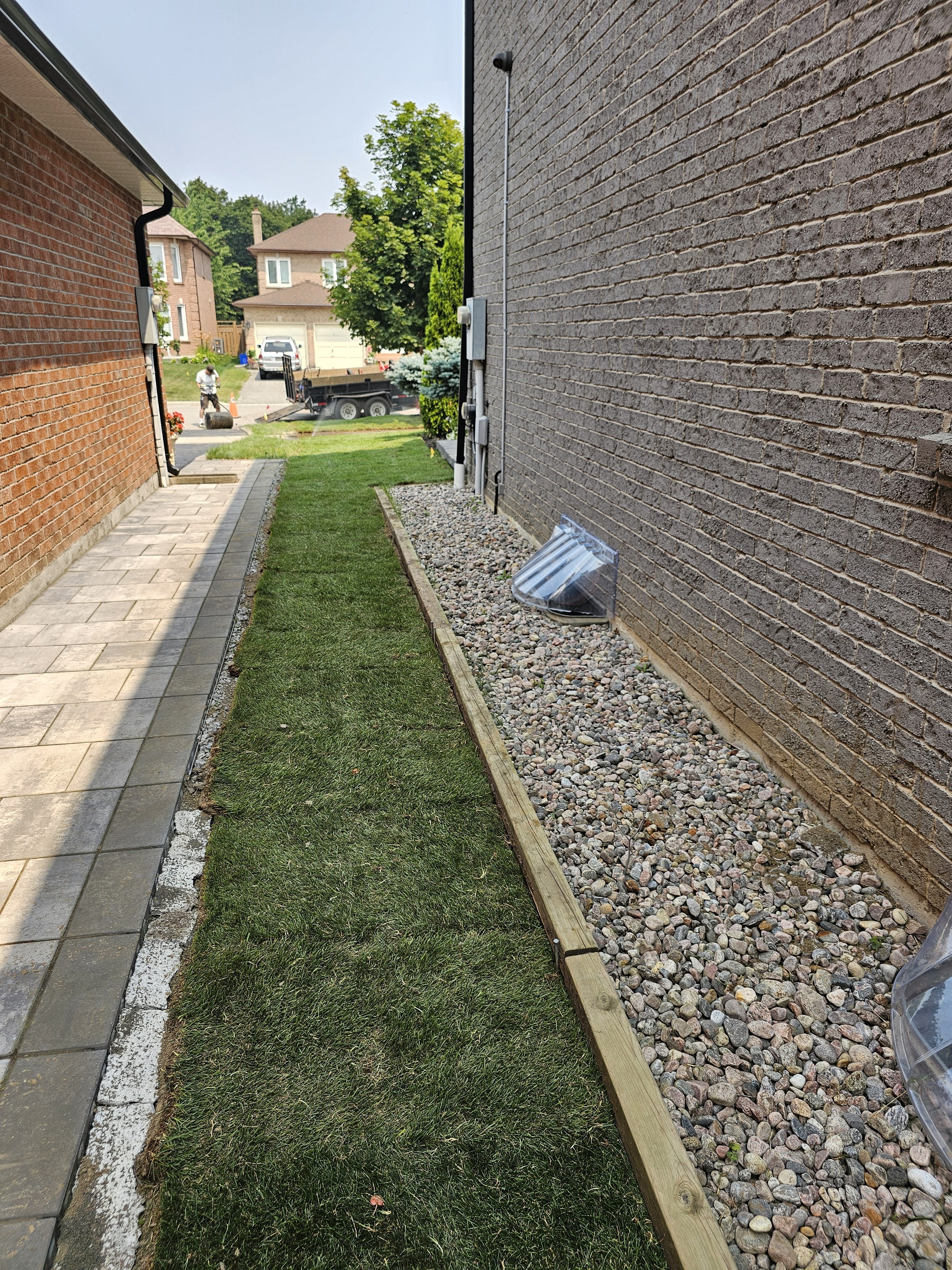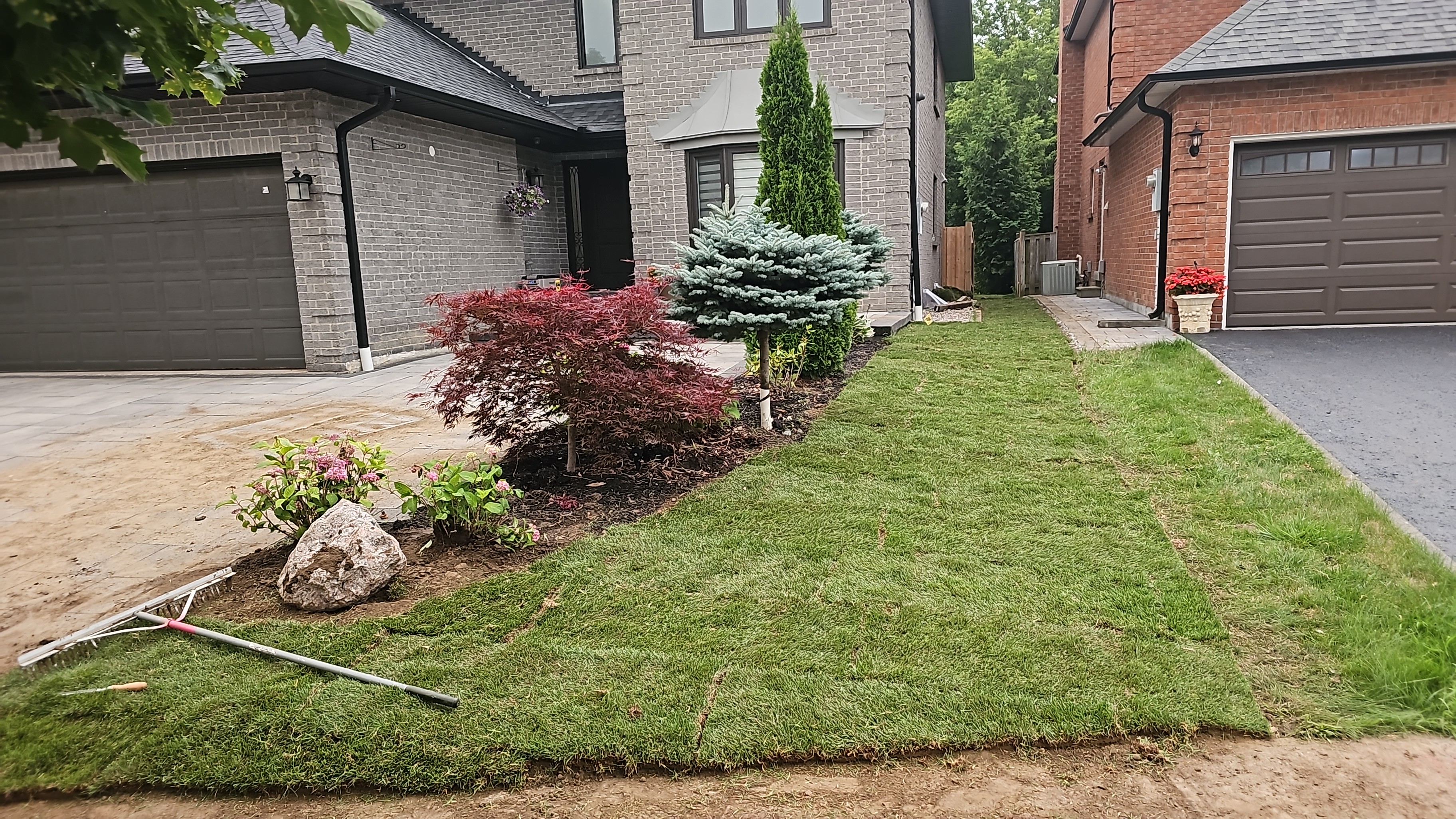
Yes, you can sod a sloped yard — but a slope changes how the sod needs to be installed. On steeper grades, fresh sod has to be physically staked down while it roots, or heavy rain can slide it right off the hill before it ever knits into the soil underneath. Get the staking, grading, and watering right and a slope establishes just like a flat lawn.
Can You Install Sod on a Steep Slope?
Slopes are part of our regular service area — hillier GTA neighbourhoods like King City and Aurora see this constantly, along with graded lots in Vaughan and parts of the Oak Ridges Moraine.
Grading and Soil Prep Specific to Slopes
Every installation starts with soil prep, but a slope needs it done more deliberately. Our standard process uses 4-6 inches of quality screened topsoil and grades the surface to roughly a 1-2% slope away from structures on flat ground — on an actual hillside, that grading work focuses on smoothing and stabilizing the grade so water sheets off evenly instead of channeling into one low point and eroding a groove before the sod roots.
Soil pH matters here too: Kentucky Bluegrass establishes best in the same 6.0-7.0 range whether the lawn is flat or sloped, so a soil test is worth doing on a slope re-do just as much as a flat installation.
Staking Sod So It Doesn’t Slide Before Rooting
This is the step that’s unique to slopes: on steeper grades, individual rolls of sod are pinned in place with biodegradable stakes (sometimes called sod staples) driven through the sod and into the soil beneath. The stakes hold each piece against gravity and rain runoff for the two to three weeks it takes roots to physically knit into the ground — after that, the root system itself is what’s holding the sod in place, and the stakes have done their job.
Rolls are also typically laid running across the slope rather than straight up and down it, with joints staggered brick-style, so there’s no single straight seam for water to funnel down.
Watering a Slope Without Runoff Washing It Out
The first-two-weeks watering schedule for any new sod is 2-3 short sessions a day, about 10-15 minutes each — but on a slope, a 15-minute straight-through watering can run off before it soaks in. Splitting that same total watering time into two or three shorter bursts with a few minutes of soak-in time between them lets the water actually reach the roots instead of sheeting downhill. From week 3 on, the schedule matches any other lawn: once a day for 20-30 minutes, then tapering to 2-3 deep waterings a week by week 5.
Is Sod or Seed Better for Erosion Control?
Sod has an immediate advantage on a slope: it arrives with an existing root mat holding soil together from day one, where grass seed leaves bare, loose soil exposed to rain for weeks before it germinates and knits together. That’s exactly the window where a hillside is most vulnerable to washing out. Staked sod skips that vulnerable window almost entirely.
When Retaining Structures Are Needed Instead
Staking and grading solve the vast majority of residential slopes. On genuinely steep grades — the kind where you’d need to lean into the hill to stand comfortably — grading alone isn’t enough and a retaining wall or terracing is the right fix before any grass goes down, sod or seed. We flag this during the same pre-installation site check where we look at drainage and grading, so it gets caught before installation day, not after.
Sloped Sod Installation FAQ
Can you install sod on a steep slope?
Yes. We stake the sod so it stays put while it roots instead of sliding or washing out, and we grade for drainage before laying it.
Do I need to water a sloped lawn differently than a flat one?
Yes — split the same total watering time into shorter, more frequent bursts so water soaks in instead of running downhill before it’s absorbed.
Is sod or grass seed better on a slope?
Sod, generally. It arrives with an established root mat holding soil in place immediately, while seed leaves bare soil exposed to erosion for weeks before it germinates.
How long do the stakes stay in on a sloped sod installation?
They’re left in place through the 2-3 week rooting window and left to biodegrade — by the time the root system has knit into the soil, the stakes have already done their job.
What if my slope is too steep for sod alone?
On genuinely steep grades, a retaining wall or terracing may be needed before sodding. We flag this during the same pre-installation check where we assess drainage and grading.
Our crews are out daily across the GTA, North York and Scarborough through to Stouffville — sod cut the morning it goes down.
Sloped Yard? We’ll Stake It So It Stays Put.
Get a free quote for your sloped or hillside lawn — graded and staked right the first time.
How we grade, stake, and water sod on a hillside so it roots instead of washing away.