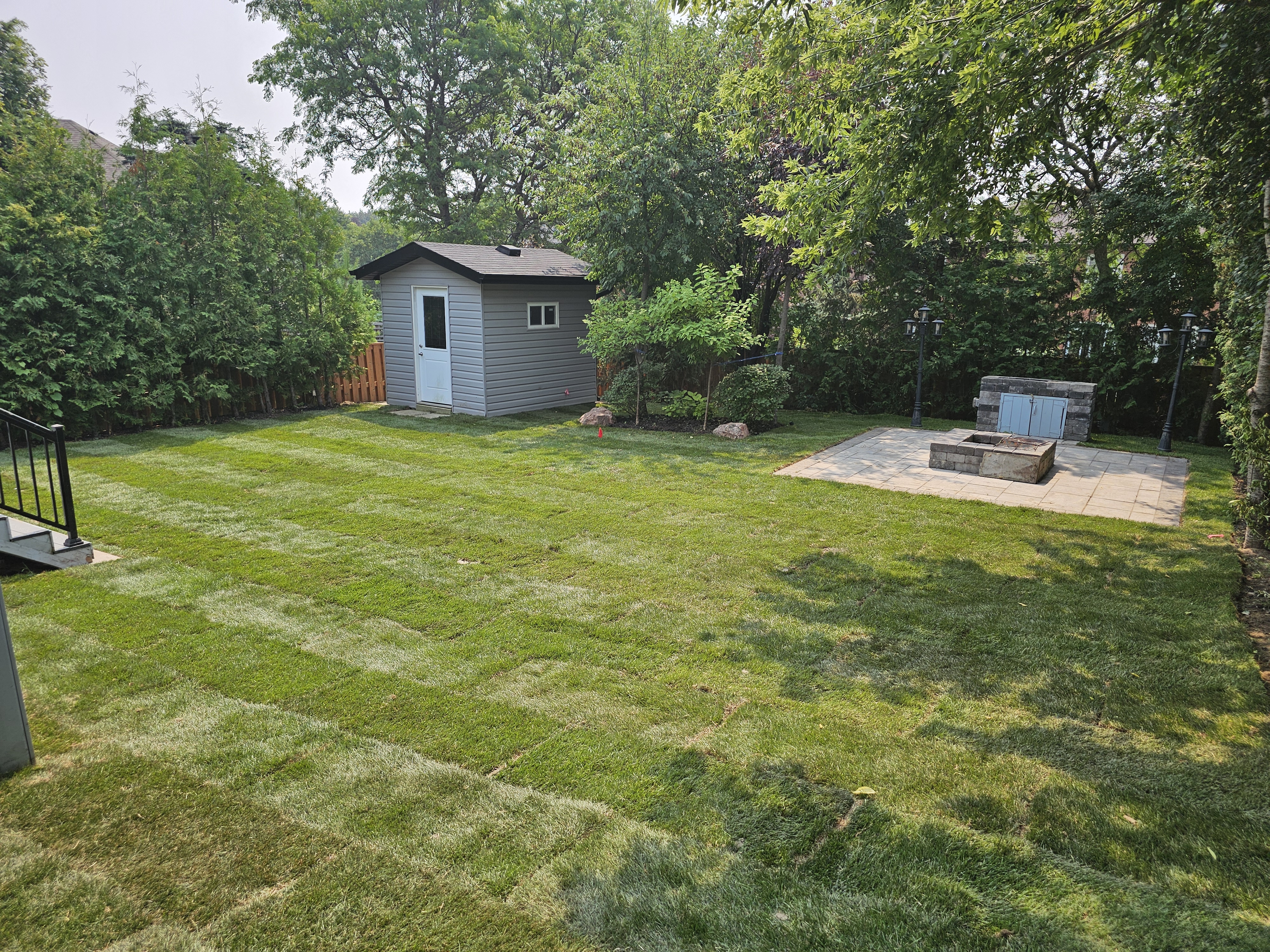
Fall-installed sod needs a different routine than spring sod as the weather turns: less frequent but still consistent watering, one final mow at the right height, and — if an early hard frost sneaks up before the roots have knit in — a night of frost protection. None of this is complicated, but skipping it in the last few weeks of the season is the most common way a good fall install gets undone.
Why Fall-Installed Sod Needs Extra Attention Going Into Winter
Sod laid in September or October is racing the calendar. Unlike a spring lawn that has an entire summer to deepen its root system, fall sod gets one shot at rooting in before the ground freezes and growth stops for the season. That makes the final few weeks before winter the most important stretch of its first year — not because fall is a bad time to sod (it isn’t, see below), but because there’s no second chance to catch a missed watering before the cold locks everything in place.
How Much Time Your Sod Needs to Root Before the Ground Freezes
Per our own timing guide, fall sodding in the GTA runs August through October, and new sod needs roughly 4–6 weeks to root before the first hard frost. We aim to finish fall installations before mid-October so there’s enough of that window left. If your sod went down in September, it has likely rooted solidly by the time frost risk arrives. If it went down in late October, treat the frost-protection steps below as more than a precaution.
Watering as the Weather Cools
Our care guide schedule starts at 2–3 waterings a day for the first two weeks, then steps down from there. As fall temperatures drop, cooler air and soil mean less water evaporates, so the same schedule that would dry out a lawn in July will over-saturate one in late October. Adjust down as the weather cools, but don’t stop watering entirely just because it’s chilly — the goal for the rest of the season is to keep the root zone consistently moist, not soaked, right up until the ground is too cold for roots to take up water at all.
Your Last Mow of the Season
General lawn-care guidance for going into winter is to leave grass a little longer than your usual summer height — around 2.5–3 inches — before growth stops for the year. Cutting it shorter exposes the crown of the plant to cold stress; leaving it noticeably longer than that risks matting down under snow, which can encourage snow mold in spring. This is standard practice for any lawn, new or established, heading into winter.
Should You Fertilize Before Winter?
Once your sod is past that initial window, general lawn-care sources recommend a fall or “winterizer” fertilizer higher in potassium and phosphorus — potassium helps grass tolerate cold, phosphorus supports root development — applied a few weeks before the ground freezes. We don’t sell or apply fertilizer as part of our installation service, so treat this as general seasonal knowledge to research or ask a lawn-care provider about, not a step we perform.
If an Early Frost Warning Hits Before Your Sod Has Rooted
If a hard frost is forecast unusually early and your sod has only been down a week or two, general cold-protection advice is to cover the area overnight with a breathable frost cloth or a thin layer of straw mulch (not hay, which carries weed seed), removing it once temperatures rise the next day. This is a stopgap for an unusually early cold snap, not something GTA fall installs typically need — most years, sod planted within our recommended window roots before overnight temperatures are a real concern.
Is Yellowing or Slow Growth Normal Going Into Winter?
Grass naturally slows and can dull in color as it goes dormant for winter — that’s normal and different from the yellowing we cover in our yellowing sod guide, which is mostly about the first 2–3 weeks after install. A fall lawn that rooted properly in September and is simply going dormant in November needs no action; it will green back up in spring. What you’re watching for is the difference between normal dormancy (even, gradual dulling) and a lawn that never rooted in the first place (patchy, thin, lifting easily when tugged).
Does Our Take-Root Guarantee Cover Fall-Installed Sod Through Winter?
Yes — the same terms apply regardless of season. Per our take-root guarantee, if you follow the watering routine we give you and your sod still doesn’t establish, we come back and make it right. Skipped or inconsistent watering, DIY fertilizer or herbicide applied before the recommended waiting period, and severe overwatering that causes rot fall outside coverage — the same exclusions that apply to a spring install apply to a fall one. If you’re not sure whether what you’re seeing going into winter is normal dormancy or a real problem, call us before you guess.
Winterizing New Sod FAQ
Do I need to keep watering new sod once it gets cold?
Yes, but less often. Cooler fall weather means less evaporation, so scale back from the first-two-weeks schedule while keeping the root zone consistently moist until the ground is too cold for roots to absorb water.
How short should I cut new sod before winter?
Leave it a little longer than your usual summer height, around 2.5–3 inches, for the last mow of the season. This protects the crown from cold stress without matting down under snow.
Should I fertilize my new sod in the fall?
Only once you’re past the first 4–6 weeks after installation, per our own care schedule. We don’t apply fertilizer ourselves, so treat any fall “winterizer” product as general lawn-care knowledge, not our service.
What if frost hits before my fall sod has rooted?
An unusually early hard frost on very recently installed sod can be covered overnight with a breathable frost cloth or light straw mulch as a stopgap. Most GTA fall installs finished within our recommended window root before this is a real concern.
Is my new sod covered by the take-root guarantee through winter?
Yes. The same take-root guarantee terms apply to fall installs as spring ones — if you follow our watering routine and the sod still doesn’t establish, we come back and fix it.
We install sod right across the GTA — including Brampton, Oakville and Toronto — and everything above applies the same way on every job.
Planning a Fall Sod Install?
We’ll tell you honestly whether there’s still time to root before winter. Free quote in 24 hours.
What to do with fall-installed sod as the temperature drops.