No — if you’re replacing your lawn with new sod, aeration and dethatching are the wrong tools for the job. Both are maintenance treatments for an existing lawn you’re keeping. A sod install starts by stripping the old lawn down to bare soil, thatch and all, which makes aerating or dethatching it first a redundant step that adds cost without adding benefit.
Why Aeration and Dethatching Don’t Apply the Same Way to a Sod Install
Aeration pokes holes through compacted soil and thatch so air, water, and nutrients reach the roots of grass that’s already there. Dethatching rakes out the dead-grass layer sitting on top of the soil so an existing lawn can breathe. Both assume you’re keeping the lawn you have and improving the ground underneath it. A full sod install does the opposite — the entire existing lawn, thatch layer included, gets removed and replaced with fresh soil and new turf, so there’s no old thatch or compaction left for aeration or dethatching to fix.
What Actually Happens to Your Old Lawn Before We Lay Sod
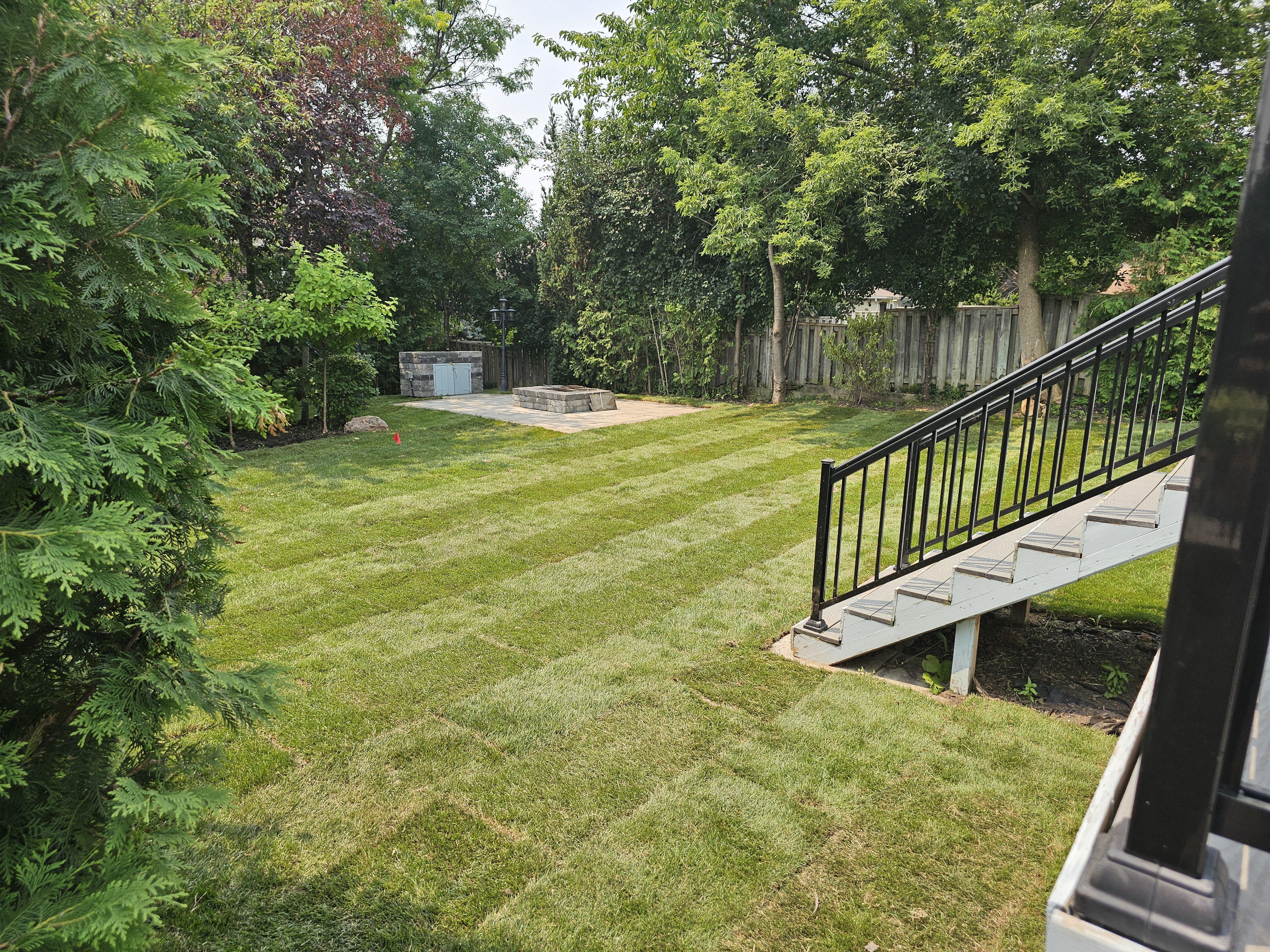
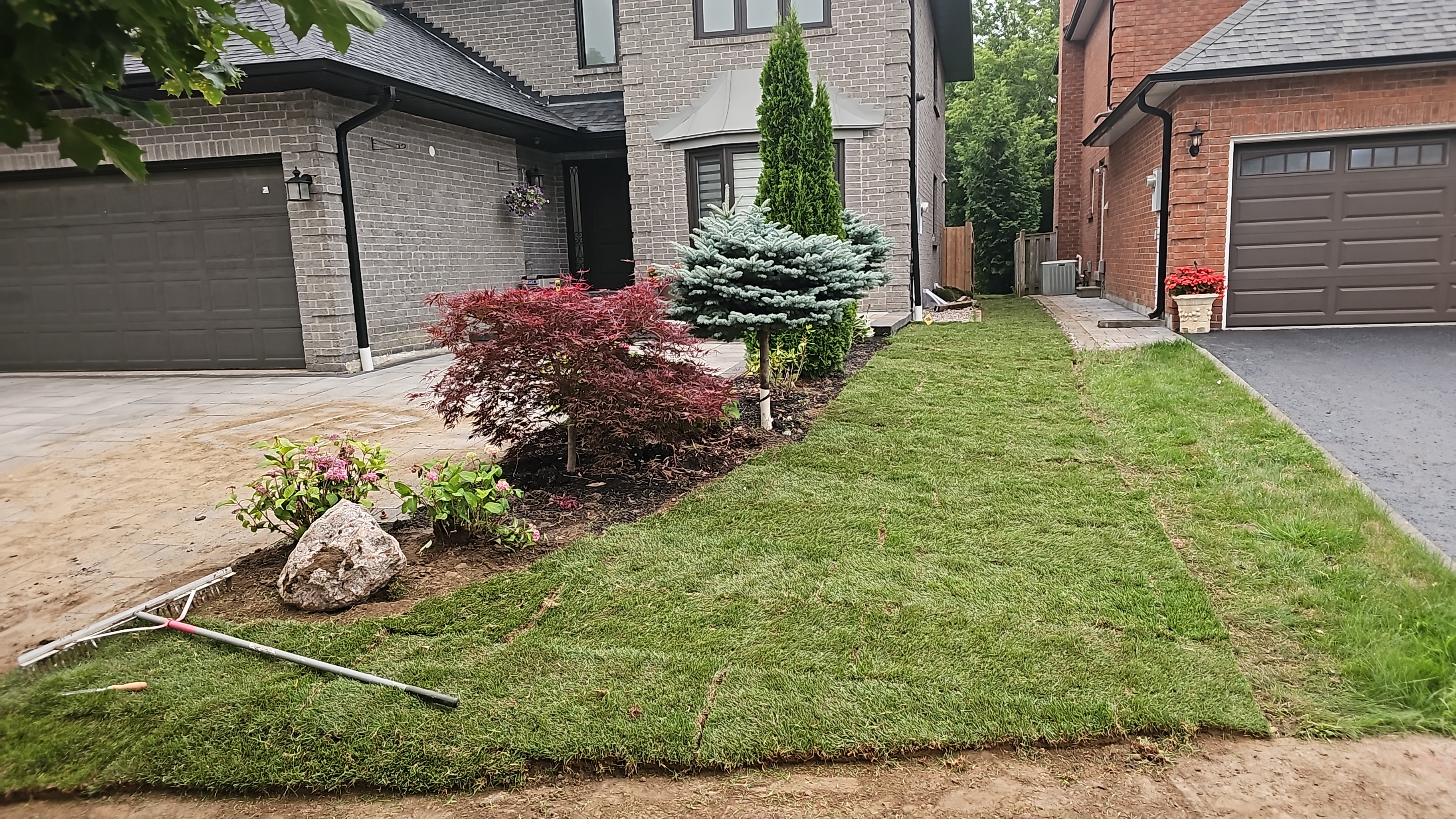
Per our own soil preparation process, our crews strip the existing grass, weeds, and thatch down to bare soil using a sod cutter, removing it in strips rather than trying to work around it. From there we grade the site to roughly a 1–2% slope away from the house and bring in 4–6 inches of quality topsoil, targeting a soil pH of 6.0–7.0 — the range Kentucky Bluegrass needs to root well in Ontario conditions. That full removal-and-rebuild is a more thorough reset than aerating or dethatching the old lawn would ever achieve, because it eliminates compaction and thatch at the source instead of working around them.
When Aeration or Dethatching Does Make Sense
These treatments are the right call when you’re keeping your existing lawn and want to improve it — typically ahead of overseeding a lawn that’s mostly healthy but thinning, compacted from foot traffic, or carrying a moderate thatch layer. If that describes your yard, aeration or dethatching followed by overseeding can be a legitimate, lower-cost path, and it’s worth trying before you commit to a full resod.
Can You Aerate a New Sod Lawn After It’s Installed?
Not right away. General lawn-care guidance is to wait a full growing season — roughly 12 months — after sod or seed goes down before aerating, so the new root system has time to establish and knit into the soil first. Aerating too early risks disturbing roots that haven’t anchored yet. During the establishment window covered by our care guide, the watering schedule alone is what your lawn needs — no aeration, dethatching, or fertilizer required.
What If Your Existing Lawn Has Thick Thatch or Serious Compaction?
This is actually one of the stronger arguments for a full resod over a DIY aerate-and-hope approach. Heavy thatch and compacted, poor-quality soil underneath are exactly what our soil prep process replaces outright — fresh topsoil at the correct depth and pH, graded properly, with none of the old problems carried forward. Instead of an annual maintenance cycle trying to keep a struggling lawn alive, a resod resets the ground once.
Aerating or Dethatching Before Sod FAQ
Should I aerate my lawn before getting new sod installed?
No. A full sod installation removes the existing lawn and thatch layer entirely with a sod cutter, so there’s nothing left for aeration to improve first. Skip it and save the cost.
Do you dethatch the old lawn as part of your sod installation service?
We don’t dethatch separately — the sod cutter removes the old grass and thatch together as part of standard soil preparation, then we rebuild the soil underneath with fresh topsoil.
How long after sod is installed can I aerate it?
General guidance is to wait about a full growing season, roughly 12 months, so the new root system is established before aerating. Aerating too early can disturb roots that haven’t anchored yet.
Is aeration a substitute for resodding a bad lawn?
Only for a lawn that’s mostly healthy and just needs a boost before overseeding. If your lawn is more than about half dead, badly patchy, or sitting on poor soil, aeration treats the surface while the underlying problem remains.
Does dethatching help with a compacted, poor-soil lawn?
It helps somewhat with the thatch layer itself, but it doesn’t fix poor soil underneath. A full resod replaces both the thatch and the soil in one step rather than treating them separately.
Whether your lawn is in Ajax, North York or Scarborough, the process is the same and so is the guarantee.
Not Sure If Your Lawn Needs Maintenance or a Reset?
We’ll tell you honestly whether aeration or a full resod is the right call for your yard. Free quote in 24 hours.
Why aeration and dethatching aren’t part of a real sod installation.