
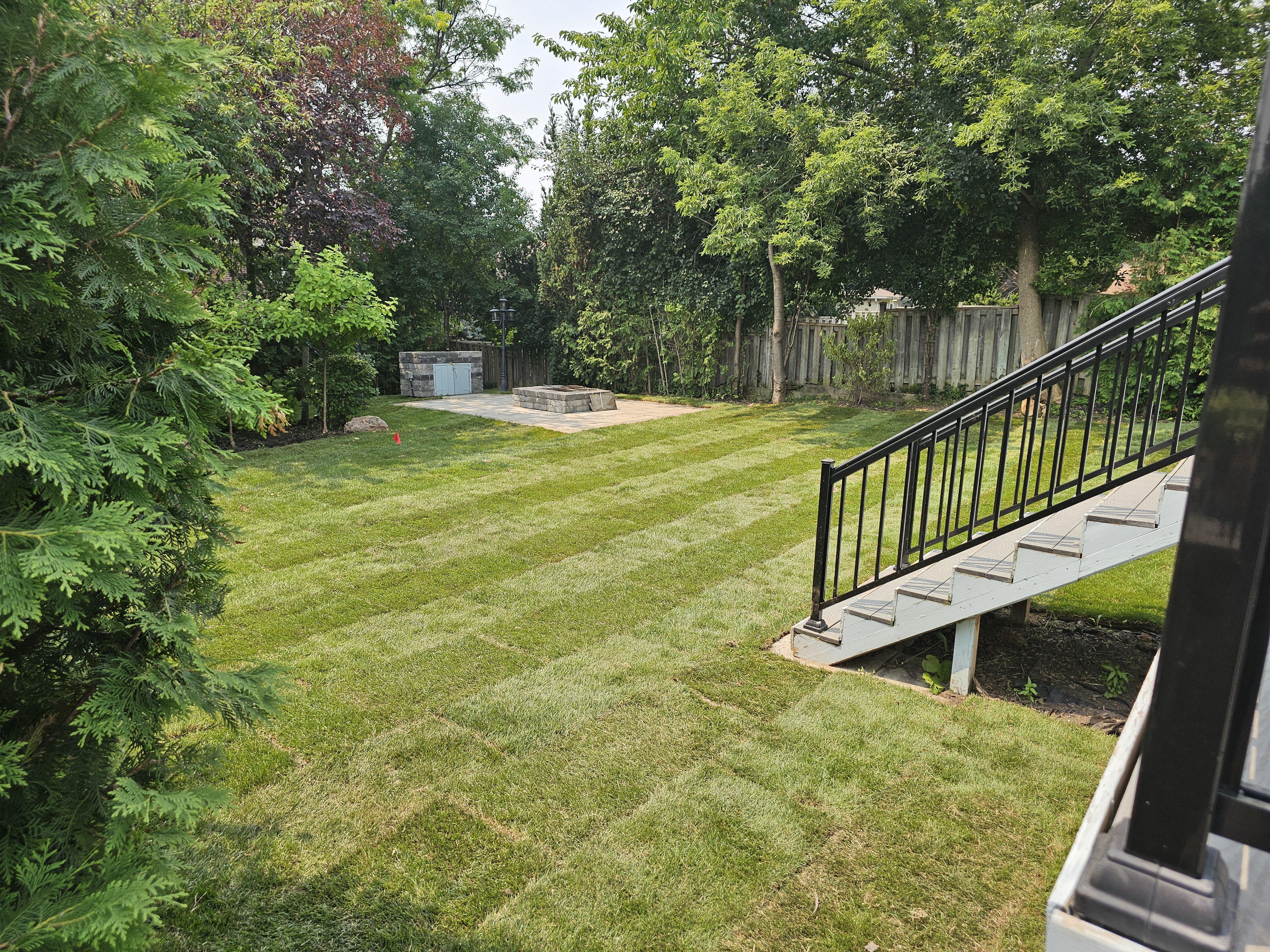
Raccoons and skunks dig up lawns hunting for grubs, worms, and other insects in the soil – and freshly laid sod is an easier target than an established lawn because the pieces haven’t rooted into the ground yet. A few nights of digging in the first week or two can lift sod that would otherwise be perfectly fine.
Why Do Raccoons and Skunks Target New Sod?
This is a mechanical problem, not a sign that anything was installed wrong. Any patch of damp, loose soil – new sod or not – is more diggable than turf that’s been rooted for a season, which is why the first one to two weeks after installation is the window to watch most closely.
Physical Barriers That Work While Sod Is Rooting
The most reliable fix during the rooting window is a physical barrier over the areas getting dug up:
- Lay chicken wire, hardware cloth, or bird netting flat across the vulnerable section
- Secure it tightly to the ground with landscape staples (loose netting can be lifted or is easy to work around)
- Leave it in place through the first one to two weeks, then remove it once the sod resists a gentle tug
It won’t stop a truly determined animal every single night, but it makes digging enough of a hassle that most move on to an easier spot.
Does It Mean You Have a Grub Problem?
Not automatically. Raccoons and skunks dig for earthworms and other soil insects too, so a night or two of digging isn’t proof of a grub infestation on its own. If the digging is heavy, repeated across multiple nights, and spreading, it’s worth checking for the classic grub-damage signs we cover in our grub damage diagnosis guide – sod that lifts in loose sheets with almost no resistance, separate from the shallower digging holes wildlife leave behind. Our crew also grades and preps the soil before every installation, which is a normal part of the process regardless of animal activity.
Once Sod Has Rooted, Digging Damage Drops Sharply
Rooting is the real fix here. Once your new lawn passes the tug test – typically week two to three on the same schedule in our new sod care guide – the roots anchor each piece firmly enough that casual digging no longer lifts whole sections the way it can in week one. This is exactly why the barrier approach above is meant to be temporary, not a permanent lawn feature.
How This Relates to Our Take-Root Guarantee
Our take-root guarantee covers sod that fails to establish when you follow the normal watering routine we give you – it isn’t written around wildlife digging specifically, one way or the other. If a raccoon or skunk lifts a section, press it firmly back into place and water it right away so the roots can keep making contact with the soil. If you’re ever unsure whether a disturbed section will still take root properly, call us and we’ll walk through it honestly rather than have you guess.
Wildlife Damage on New Sod FAQ
Why do raccoons or skunks dig up new sod?
They’re hunting grubs, worms, and other insects in the soil. Freshly watered or recently rained-on lawns bring those insects closer to the surface, and new sod is an especially easy target because the soil underneath hasn’t knit together yet, so pieces lift with far less effort than an established, rooted lawn.
Does animal digging mean I have a grub infestation?
Not necessarily – raccoons and skunks dig for worms and other insects too, not just grubs. Occasional light digging isn’t a reliable sign of an infestation. Repeated, heavy digging night after night across large areas is a stronger signal worth investigating, covered in our grub damage diagnosis guide.
How do I stop raccoons or skunks from digging up new sod?
A physical barrier is the most reliable option while sod is rooting: stake chicken wire, hardware cloth, or bird netting flat over the vulnerable area with landscape staples so digging is frustrating rather than rewarding. Remove it once the sod has rooted.
What do I do if sod pieces already got lifted?
Press the pieces firmly back into place as soon as you notice them, making sure the edges sit flush against the neighbouring pieces, then water the area right away to help the roots re-contact the soil.
Is wildlife digging covered under your take-root guarantee?
Our guarantee covers sod that fails to root when you follow the normal watering routine we provide – it isn’t written around wildlife digging one way or the other. If pieces get lifted, press them back down and water immediately, and call us if you’re ever unsure whether an area will still take root.
Our crews are out daily across the GTA, Markham and Vaughan through to Brampton — sod cut the morning it goes down.
Get a Lawn That Roots Fast
The faster your new sod knits into the soil, the less of a target it is for digging – get your free quote today.
Why raccoons and skunks target new sod, physical barriers that work, and how it ties to our take-root guarantee.


