If sections of your lawn lift away in loose sheets with almost no resistance, grubs have very likely eaten through the root system holding the grass down. It’s one of the most common reasons GTA lawns need a full resod rather than a repair. Confirm it with a quick tug test below, then see how we prep the soil for a fresh start once the grub problem is dealt with.
Why Does My Lawn Pull Up Like Carpet?
This is different from ordinary thinning or drought stress, which tends to yellow evenly across sun-exposed areas rather than lift physically out of the ground. If you can roll a section back with your hand, root loss — not just leaf-level damage — is the problem.
How to Confirm It’s Grubs (Not Something Else)
Before treating anything, confirm what you’re actually dealing with:
- Tug test: grab a handful of grass at the edge of a damaged patch and pull firmly upward. If it lifts easily with little resistance, roots have likely been severed.
- Shovel or plug test: dig a small square of turf about 6-8 inches deep near the damaged area and look for white, C-shaped larvae in the top few inches of soil.
- Pattern check: grub damage usually spreads outward in irregular patches from a starting point, rather than the uniform, even browning you’d expect from drought or heat stress across sun-exposed areas.
Not all brown, liftable turf is grubs — fungal disease and dormancy can look similar. If you’re not sure, the tug test plus a look at the soil underneath is the fastest way to know before you spend money on the wrong fix.
Why Skunks and Raccoons Dig Up Grub-Damaged Lawns
If you’re waking up to torn-up divots or shredded corners of lawn overnight, grubs are usually the reason. Skunks and raccoons feed on the larvae directly beneath the surface, and digging them out tears up the grass above — often making existing grub damage look considerably worse overnight.
Treating Grubs Before You Resod
Because grub damage lives in the soil, not just on the surface, resodding straight on top of an active population risks the same damage recurring under your new lawn. Preventive grub control is generally applied in spring, before eggs hatch, while curative treatment for a visible, active infestation tends to be more effective in late summer through fall when grubs are largest and feeding near the surface — a local lawn-care or pest-control provider can confirm the right timing and product for your situation.
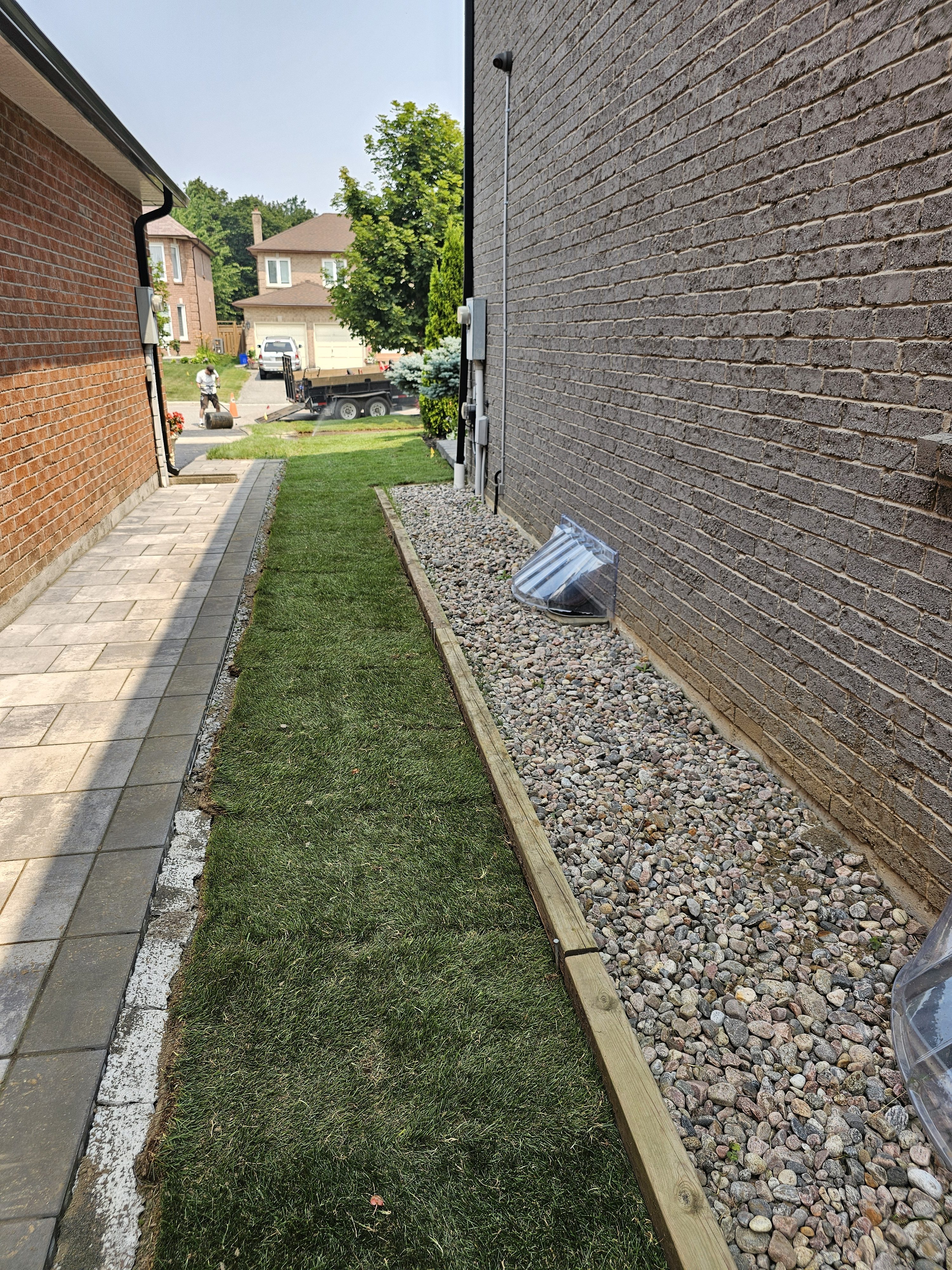
Once the grub population is addressed, our part is the install: we strip the dead turf with professional sod cutters (included in every project), then prep fresh topsoil and grade the site properly before laying new sod — the same 4-6 inches of screened topsoil and 6.0-7.0 pH range we use on every installation, so roots have clean, loose soil to establish into instead of the compacted, root-eaten ground that caused the problem in the first place.
Repair vs. Full Resod — When Each Works
A small, isolated grub patch can sometimes be repaired on its own. But as a general rule, once more than half a lawn is dead, patchy, or lifts up easily, full resodding is more cost-effective and gives a more uniform, healthy result than patchwork repair.
Does Grub Damage Void the Take-Root Guarantee?
Grub Damage FAQ
How do I know if grubs are damaging my lawn?
Grab a handful of grass at the edge of a brown or thinning patch and pull firmly upward. If it lifts easily with little resistance, like peeling up loose carpet, the roots have likely been eaten. Dig up a small plug 6-8 inches deep and look for white, C-shaped larvae in the top few inches of soil to confirm.
Will grubs come back after I resod?
Not if the underlying grub population is treated before we install. Resodding on top of an active infestation without addressing it risks the same damage happening again, which is why we recommend treating the lawn for grubs first, then letting our crew remove the dead turf and prep fresh topsoil underneath.
Does grub damage void my take-root guarantee?
Our take-root guarantee covers whether the new sod we install establishes when you follow the standard watering routine. It doesn’t extend to a pre-existing pest problem in the soil that predates installation, which is exactly why resolving the grub issue is part of getting a clean start, not something to sort out afterward.
When is the best time to treat grubs before resodding?
Preventive grub control generally works best applied in spring before eggs hatch, while curative treatment for an active, visible infestation is more effective in late summer through fall when grubs are largest and feeding near the surface. A local lawn-care or pest-control provider can confirm timing for your situation.
How much of my lawn needs to be grub-damaged before I should resod instead of repair?
As a general rule, once more than half a lawn is dead, patchy, or pulls up easily, full resodding is more cost-effective and gives a more uniform result than patch repair.
Our crews are out daily across the GTA, Thornhill and Newmarket through to Richmond Hill — sod cut the morning it goes down.
Grubs Wrecked Your Lawn?
Skip the patchwork repairs — get a free resod quote and start clean.
Carpet-like lifting turf, confirmed – and how to fix it before you resod.