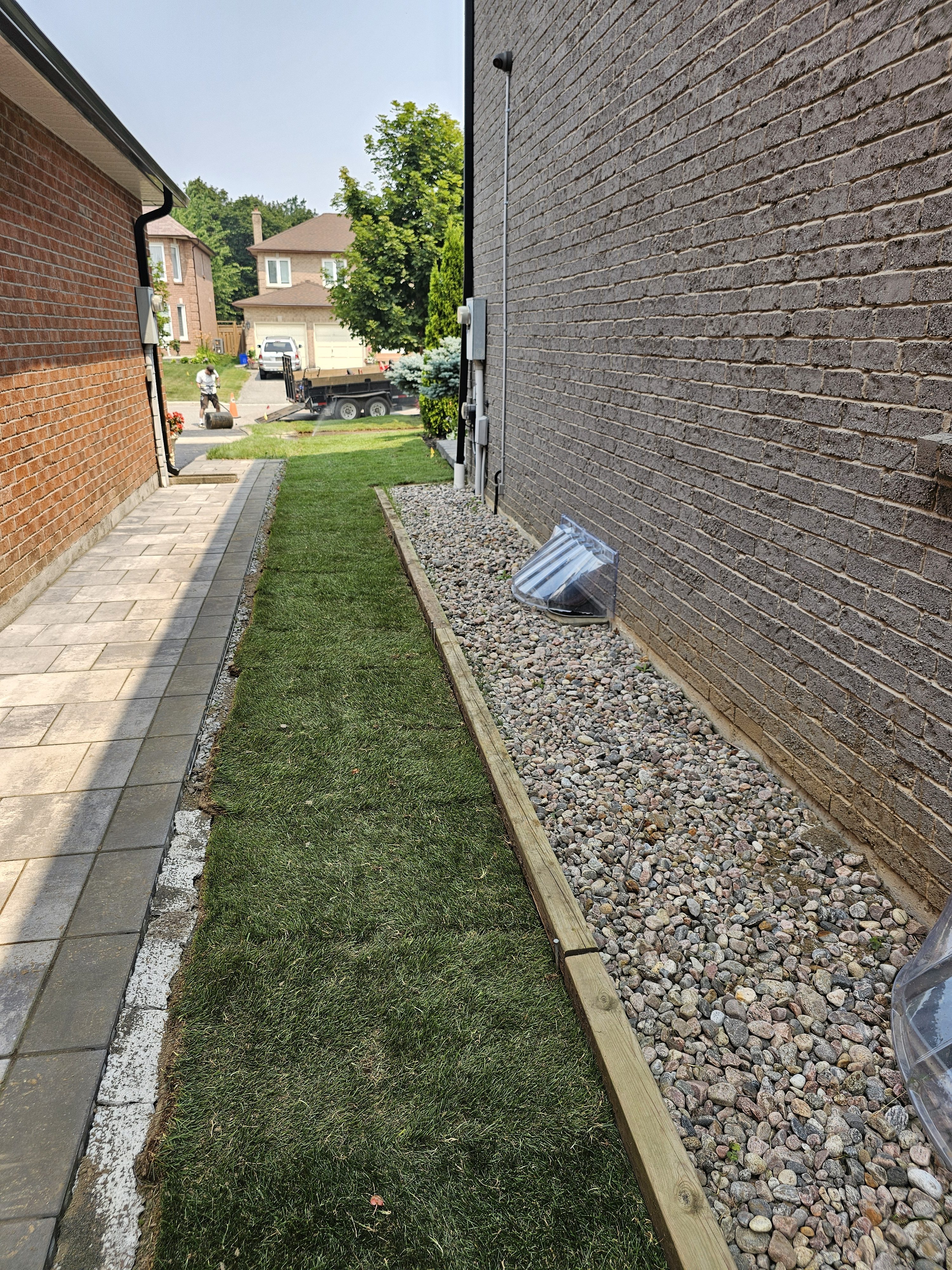
Most new sod knits into the soil within 2-3 weeks. If yours still lifts easily with no resistance past that window, it’s usually one of four things: watering, soil contact, timing, or foot traffic. Here’s how to tell which one, and how our take-root guarantee covers a genuine failure to establish.
How Do You Know If Sod Isn’t Taking Root? (The Tug Test)
Reason 1: Watering — Too Little or Too Much
Keeping the soil underneath consistently moist for the first 14 days is the single biggest factor in whether new sod succeeds. Our own aftercare schedule calls for watering 2-3 times a day for about 10-15 minutes per session in the first two weeks, then reducing to once a day for 20-30 minutes in weeks 3-4.
- Under-watering: the soil beneath the sod dries out and roots can’t penetrate it, even if the surface looks green.
- Over-watering: waterlogged soil can suffocate roots before they form, and consistent, severe overwatering shows up as a sour smell or mushy, slimy footing — see our rot diagnosis guide if that’s what you’re seeing.
Full watering-by-week breakdown: New Sod Care Guide.
Reason 2: Poor Soil Contact or Prep
Sod is a living product — its roots need to make contact with loose, nutrient-rich soil within hours of being cut. If the soil underneath is compacted, full of debris, or at the wrong pH, roots simply can’t penetrate it and the sod dries out from below regardless of how well you water on top. We grade and add fresh topsoil (4-6 inches, pH 6.0-7.0) under every installation for exactly this reason — see our soil preparation guide for the full process.
Reason 3: Heat Stress or Bad Timing
Sod can be installed from April through November in Ontario, with spring and fall being the most forgiving windows. Summer installs work well too, but a heat wave combined with even a brief lapse in watering can stall root development — staying strict on the schedule matters more in hot stretches.
Reason 4: Foot Traffic Too Soon
Avoid walking on new sod as much as possible for the first two weeks. Roots need undisturbed time to establish into the soil, and heavy foot traffic, kids, pets, or equipment on the lawn too early can break the root-to-soil contact before it sets.
When to Call Us (and What the Take-Root Guarantee Covers)
If you followed the schedule and your sod still isn’t rooting past the 2-3 week window, call us — our take-root guarantee covers a return visit at no charge. Full terms and how to make a claim are on that page.
Sod Not Taking Root FAQ
How long does sod normally take to root?
Roots typically knit into the soil within 2-3 weeks under normal watering. The tug test is the best way to check: if a corner resists lifting, roots are establishing.
What’s the #1 reason sod fails to root?
Inconsistent watering, in either direction. Keeping the soil underneath consistently moist for the first 14 days is the single biggest factor in whether new sod establishes.
Will my take-root guarantee cover sod that didn’t root?
Yes, if you followed the standard watering routine and it still didn’t establish, we come back and make it right at no charge. Coverage doesn’t extend to skipped or inconsistent watering, pet damage, or DIY fertilizer or herbicide applied before the recommended waiting period.
Can bad soil prep cause sod to fail even with perfect watering?
Yes. Roots need to contact loose, nutrient-rich soil within hours of the sod being laid. Compacted soil, leftover debris, or the wrong pH stops roots from penetrating no matter how well you water on top, which is exactly why we grade and add fresh topsoil under every installation.
Is it normal for sod to lift slightly when I check it?
In the first week or so, yes, some give is normal while roots start establishing. If it still lifts easily with no resistance at all after 3 or more weeks, that’s worth calling us about.
Sodding Company works throughout the Greater Toronto Area, from Oakville to Brampton and Mississauga. Same fresh-cut sod, same take-root guarantee, wherever your lawn is.
Sod Not Rooting Right?
Get a free assessment — we’ll walk through your watering routine and tell you honestly what’s going on.
Four common causes, the tug test to check, and exactly what our guarantee covers.