The weeds GTA homeowners see most are dandelion, crabgrass, white clover, and creeping Charlie — each one is a sign your existing turf has thin or bare spots for it to move into, not a random invasion. Spot-treating a few patches is usually enough on an otherwise healthy lawn. But once weeds have taken over roughly half the lawn or more, pulling and spraying becomes an endless cycle, and a full resod with corrected soil gives you one dense, weed-resistant lawn instead.
What Are the Most Common Weeds in GTA Lawns?
Dandelion is the one everyone recognizes: bright yellow flowers on a deep taproot that regrows if you don’t remove the whole root. Crabgrass is a low-growing annual grassy weed that germinates in late spring and spreads fastest through hot, dry patches in June and July. White clover shows up as small three-leaf clusters with white flowers, usually where nitrogen levels are low. Creeping Charlie (ground ivy) has round, scalloped leaves and purple spring flowers, and spreads aggressively through runners in shaded, moist areas — the same conditions that cause moss and lawn fungus.
Why Do Weeds Take Over in the First Place?
Weeds are opportunists — they establish wherever grass is thin, bare, or stressed, not on a dense, healthy lawn. Mowing too short, compacted soil, poor drainage, and bare patches left by grub damage or heavy foot traffic all open the door. If your yard has low spots that hold water or compacted clay under a thin lawn, see our drainage guide and soil-prep guide first — fixing the underlying soil does more for long-term weed resistance than any spray.
Pull, Spray, or Just Resod?
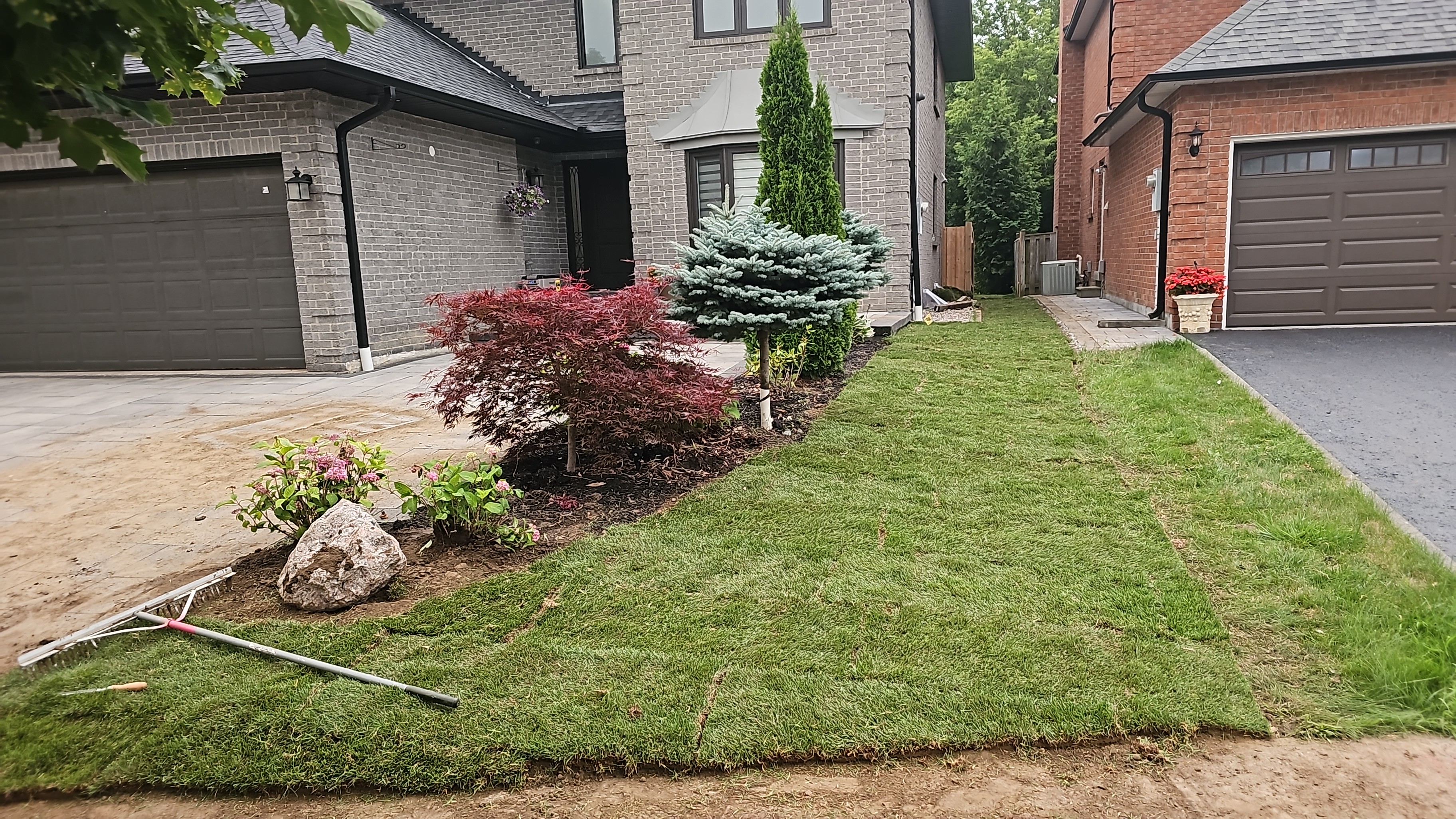
For a scattered dandelion or two on an otherwise thick lawn, hand-pulling or spot treatment is usually all you need. But once weeds and the thin turf around them cover roughly half the lawn or more — the same threshold we use for grub damage and fungus — ongoing weeding stops being worth the time. A full resod with corrected grading and fresh topsoil gives you one dense, uniform lawn that starts weed-free instead of a patchwork of pulled spots and bare soil.
Weeds and Our Take-Root Guarantee
Our take-root guarantee doesn’t specifically address weed regrowth either way — it wasn’t written around that scenario, so we’re not going to imply coverage that isn’t there. What the guarantee terms do exclude is DIY interference, including applying herbicide or weed-control products before the recommended waiting period. Our care guide already asks you to wait at least 4-6 weeks before any fertilizer or lawn product on new sod — the same caution applies to herbicide. If weeds show up on newly installed sod, call us before applying anything yourself.
Why Fresh Sod Starts Weed-Free
Sod farms grow a dense, single-species turf under cultivated conditions, so freshly cut sod arrives essentially weed-free — a head start no amount of seeding gives you. Once it’s installed, the same watering and mowing routine that protects against overwatering and rot also keeps the lawn thick enough to out-compete new weed seed: water deeply rather than lightly and often, keep mowing height on the higher end, and skip fast-release nitrogen in the first season.
Common Lawn Weeds FAQ
What are the most common lawn weeds in the GTA?
Dandelion, crabgrass, white clover, and creeping Charlie (ground ivy) are the four most common. Dandelion and clover show up in thin or low-nitrogen lawns, crabgrass spreads in hot dry patches, and creeping Charlie thrives in shaded, moist areas.
Why does my lawn keep getting weeds even after I pull them?
Weeds establish in thin, bare, or stressed turf, not dense healthy grass. Mowing too short, compacted soil, poor drainage, and bare patches from grub damage or foot traffic all give weeds an opening to keep coming back.
Do I need to spray herbicide before resodding?
Not for the resod itself — the old lawn and its weeds are removed as part of installation. We don’t apply herbicide ourselves; if you want active weed treatment on your current lawn for another reason, that’s a separate service from a lawn-care provider.
Is weed regrowth covered by your take-root guarantee?
The guarantee wasn’t written around weed regrowth specifically, so we don’t claim coverage either way. What it does exclude is DIY interference, including applying herbicide before the recommended waiting period — call us before you apply anything to new sod.
How many weeds mean I should resod instead of just treating them?
Once weeds and the thin turf around them cover roughly half the lawn or more — the same threshold we use for grub damage and fungus — a full resod with corrected grading gives a faster, more uniform result than ongoing pulling and spraying.
We install sod right across the GTA — including Brampton, Oakville and Toronto — and everything above applies the same way on every job.
Ready for a Weed-Free Lawn?
Skip the endless pulling and spraying — get a free resod quote and start clean with proper grading.
Dandelion, crabgrass, clover, and creeping Charlie — what they mean, when to treat, and when to just resod.