Ontario’s most common lawn fungal diseases — red thread, dollar spot, and rust — show up as reddish, straw-colored, or yellow-orange patches during damp, humid stretches. Most cases clear up once you adjust mowing, watering, and fertilizing, without any fungicide. But once fungal damage has thinned or killed more than half the lawn, resodding gets you a uniform, healthy result faster than repeated treat-and-reseed cycles.
What Does Lawn Fungus Actually Look Like?
Red thread is the one most GTA homeowners see first: irregular straw-colored patches from a couple of inches to a few feet across, with thin reddish-pink threads clinging to the grass tips that are easiest to spot with morning dew still on the lawn. Dollar spot makes smaller, silver-dollar-sized bleached spots, usually on lawns cut short and under-fertilized. Rust starts as small yellow flecks that turn into orange, powdery pustules — if your shoes or mower turn orange-dusty after cutting, that’s rust. All three spread fastest in warm, humid weather with extended leaf wetness, which is exactly the pattern GTA summers produce.
What Causes Fungus to Take Hold in GTA Lawns?
Fungal disease needs moisture sitting on the grass blade for extended periods, so it clusters around the same conditions that cause moss and drainage problems: shaded, poorly-draining areas that stay damp overnight, watering in the evening instead of the morning, mowing too short, and over-fertilizing with fast-release nitrogen that pushes soft, disease-prone growth. If your yard has low spots that hold water, see our drainage guide first — fixing the grading usually does more for fungus prevention than any product.
Treat It, or Just Resod?
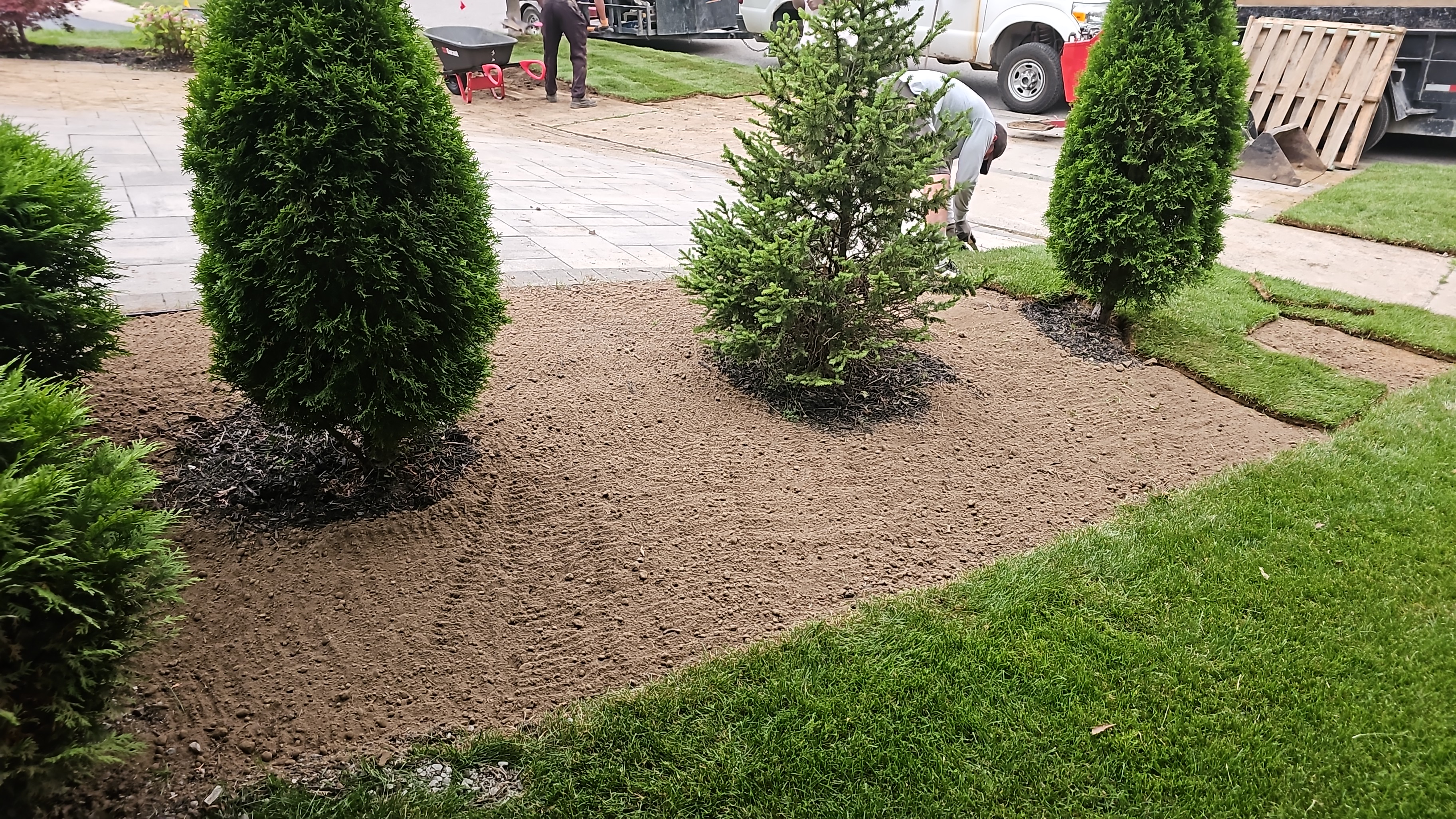
For an isolated patch or two on an otherwise healthy lawn, home fungicides are rarely necessary — tightening the basics (mow higher, water deeply and infrequently in the morning, cut back on nitrogen) usually lets the lawn out-grow it within a few weeks. But once fungal damage — or the thin, weakened turf it leaves behind — covers roughly half the lawn or more, the same threshold we use for grub-damaged and mossy lawns, patch-by-patch treatment and reseeding stops being worth the time. A full resod with corrected grading and fresh topsoil gives you one uniform, disease-free start instead of an ongoing repair project.
Fungicide, Fertilizer, and Our Take-Root Guarantee
Our take-root guarantee doesn’t specifically address fungal disease either way — it wasn’t written around that scenario, so we’re not going to imply coverage that isn’t there. What the guarantee terms do exclude is DIY interference, including early fertilizing or applying products before the recommended waiting period. Our care guide already asks you to wait at least 4-6 weeks before any fertilizer on new sod; the same caution applies to any fungicide or lawn-disease product. If a fungus problem shows up on newly installed sod, call us before applying anything yourself.
Preventing Fungus After You Resod
New sod is actually less fungus-prone than an old, thatch-heavy lawn once it’s established, provided you follow the same watering routine that protects against overwatering and rot: water deeply in the morning rather than a little every evening, so the grass blades dry out during the day instead of sitting wet overnight. Keep mowing height on the higher end and skip fast-release nitrogen in the first season. If you’re not sure whether new-lawn symptoms are normal transplant stress or something else, our overwatering & rot diagnosis guide covers the difference.
Lawn Fungus FAQ
What does lawn fungus look like on a GTA lawn?
The three most common types are red thread (straw-colored patches with reddish thread-like strands on the grass tips), dollar spot (small, silver-dollar-sized bleached spots), and rust (yellow flecks that turn into orange, powdery pustules). All three spread fastest during warm, humid weather.
What causes lawn fungus to spread?
Extended moisture on the grass blade is the main driver — shaded or poorly-draining areas that stay damp, evening watering, mowing too short, and over-fertilizing with fast-release nitrogen all make a lawn more prone to fungal disease.
Do I need a fungicide to treat lawn fungus?
Usually not for isolated patches. Adjusting mowing height, switching to deep morning watering, and cutting back on nitrogen typically lets a home lawn out-grow red thread, dollar spot, or rust within a few weeks. We don’t apply fungicide ourselves — we install sod.
Is fungal lawn damage covered by your take-root guarantee?
The guarantee wasn’t written around fungal disease specifically, so we don’t claim coverage either way. What it does exclude is DIY interference, including fertilizing or applying products before the recommended waiting period — call us before you apply anything to new sod.
How much fungal damage means I should resod instead of treat it?
Once fungal damage and the thin turf around it cover roughly half the lawn or more — the same threshold we use for grub damage and moss — a full resod with corrected grading gives a faster, more uniform result than ongoing patch treatment.
We install sod right across the GTA — including Toronto, Mississauga, Vaughan, Markham and Brampton — and everything above applies the same way on every job.
Ready for a Fungus-Free Lawn?
Skip the patch-and-repeat cycle — get a free resod quote and start clean with proper grading.
Red thread, dollar spot, and rust — what they look like, when to treat, and when to just resod.