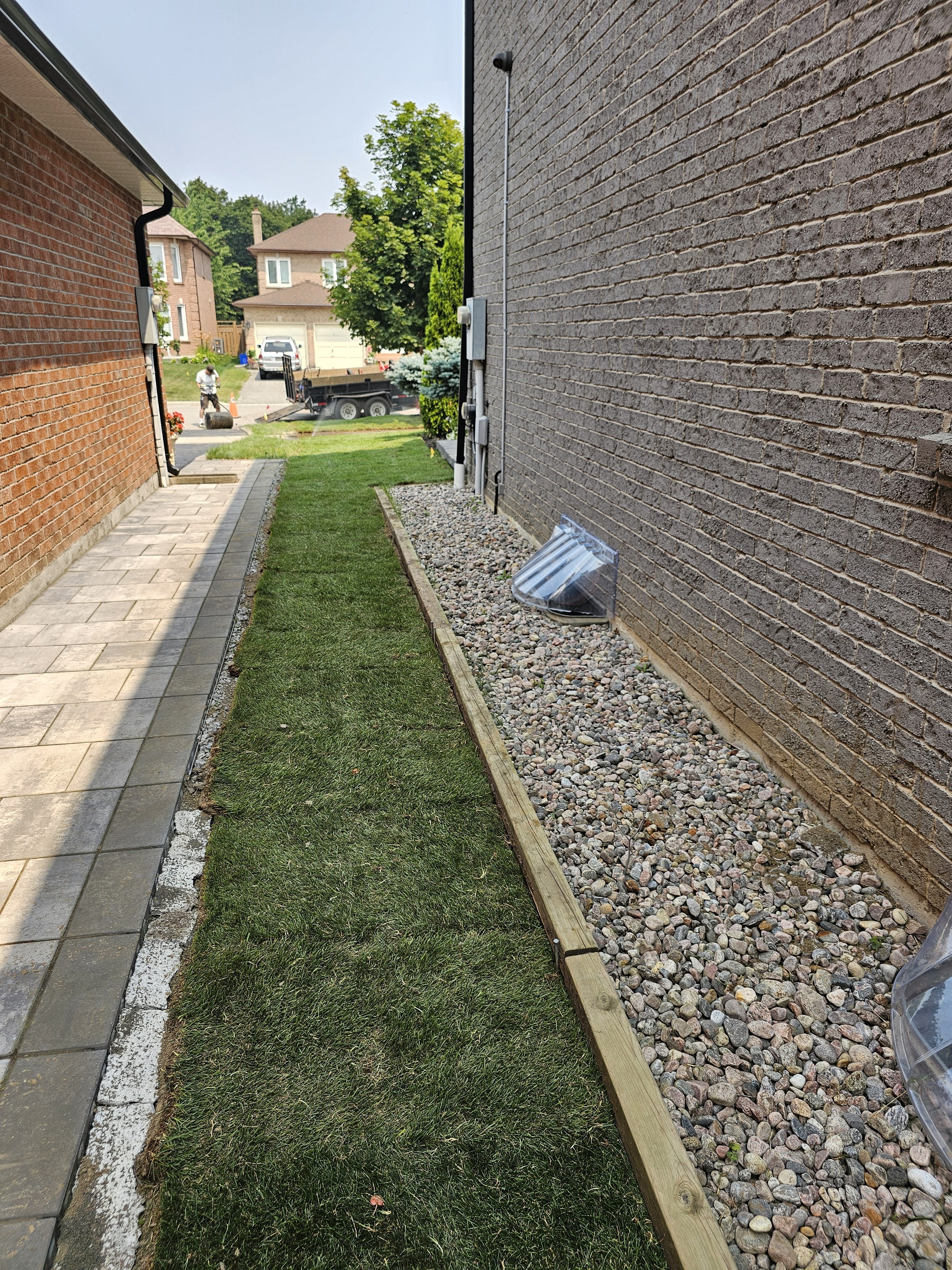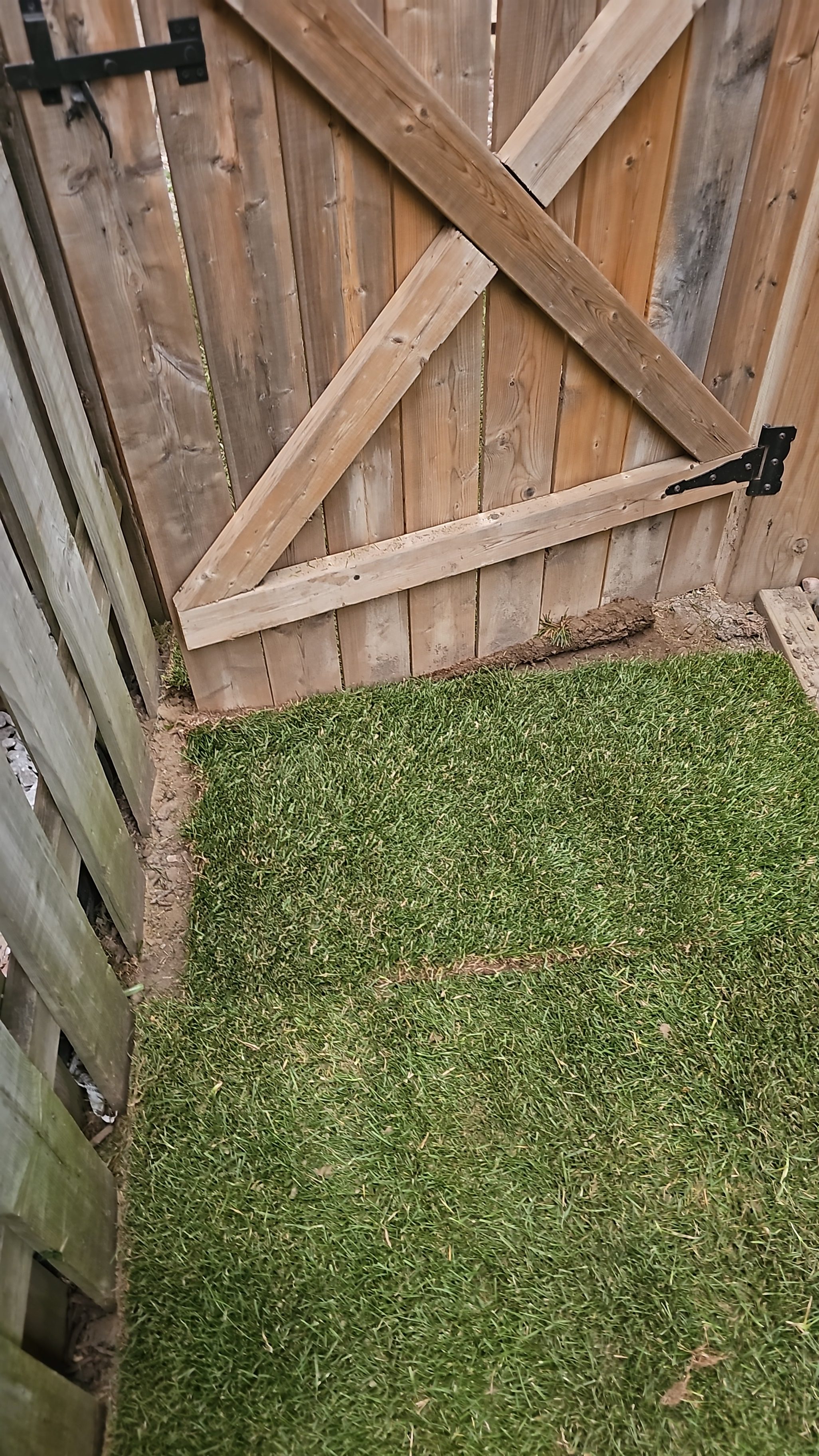
Stay off new sod as much as possible for the first two weeks so the roots can knit into the soil underneath. Light foot traffic for watering is fine, but keep kids, pets, and heavy equipment off. Once the sod passes the tug test — usually around week 2-3, the same window covered in our new sod care guide — you can start easing back into normal use.
How Long Until You Can Walk on New Sod?
The timeline isn’t a fixed number of days for every yard — it depends on how well the roots have knit into your soil, which is why we check with a physical test rather than a calendar guess.
The Tug Test: How to Check If Roots Have Taken Hold
Gently grab a corner or edge of a sod piece and tug on it. If it resists and doesn’t lift, the roots have started establishing into the soil underneath and the sod can handle a bit more traffic. If it lifts easily with little resistance, give it more time before adding foot traffic — walking on unrooted sod can shift the pieces, open gaps at the seams, and slow establishment.
Week-by-Week: First 14 Days, Weeks 3-4, After a Month
First 14 days: Stay off it as much as possible. Water 2-3 times a day per our care guide‘s schedule, and limit foot traffic to what’s needed for watering.
Weeks 3-4: Watering drops to once a day with a deeper soak. This is also when most lawns pass the tug test and are ready for their first mow — wait at least 2-3 weeks before that first cut, and only mow once the sod resists tugging rather than lifting.
After a month: Once the sod has had its first mow and watering has transitioned to a few deep soakings a week, it’s generally ready for normal use — regular foot traffic, kids playing, and pets running around.
What Happens If You Walk on It Too Soon
Foot traffic before the roots have knit in can shift individual pieces out of alignment, open visible gaps between rolls, and compact the soil underneath unevenly — all of which slow down establishment and can leave patchy spots that take longer to fill in. It’s rarely permanent damage from one or two crossings, but repeated traffic in the first two weeks is the most common way a new lawn ends up rooting unevenly.
Pets and Kids: Managing Traffic During Establishment
The hardest part of the first two weeks for most households is keeping dogs and kids off a lawn that looks perfectly walkable. A temporary barrier (stakes and twine, or a portable fence section) around the newly sodded area works well for the first 2 weeks. After that, short supervised access is generally fine as the sod firms up through weeks 3-4, building up to full normal use once it’s had its first mow.
How This Ties Into Our Take-Root Guarantee
Our take-root guarantee covers sod that fails to establish when you follow the normal watering routine — it doesn’t require you to track foot traffic day by day, but heavy, repeated traffic in the first two weeks is one of the more common reasons a lawn struggles to root evenly. If you’re not sure whether an area got walked on too much too soon, that’s exactly the kind of thing to mention if you ever call about a spot that isn’t taking root.
Walking on New Sod FAQ
How long before you can walk on new sod?
Avoid walking on it for the first 2 weeks. Light foot traffic is fine once it passes the tug test, usually around week 2-3, and it’s generally ready for normal use by the 3-4 week mark, once it’s had its first mow.
What is the tug test?
Gently tug a corner of the sod. If it resists lifting, the roots are establishing into the soil. If it lifts easily, give it more time before adding foot traffic.
Can kids and pets use the yard right away?
Not right away. Keep kids, pets, and heavy equipment off for the first 2 weeks, then ease back in with light, supervised access through weeks 3-4 before returning to normal use.
When can I mow new sod for the first time?
Wait at least 2-3 weeks, and only mow once the sod resists a gentle tug rather than lifting. Set the mower to its highest setting for the first cut.
Does walking on new sod too soon void the take-root guarantee?
Our guarantee covers sod that fails to establish under a normal watering routine. Heavy repeated foot traffic in the first two weeks is one of the more common causes of uneven rooting, so it’s worth mentioning if you ever call about a patch that isn’t taking root.
Our crews are out daily across the GTA, Richmond Hill and Markham through to Toronto — sod cut the morning it goes down.
Get Your Free Installation Timeline
Follow our week-by-week guide and your new lawn stays covered under our take-root guarantee.
The tug test, the week-by-week timeline, and how it ties to our take-root guarantee.