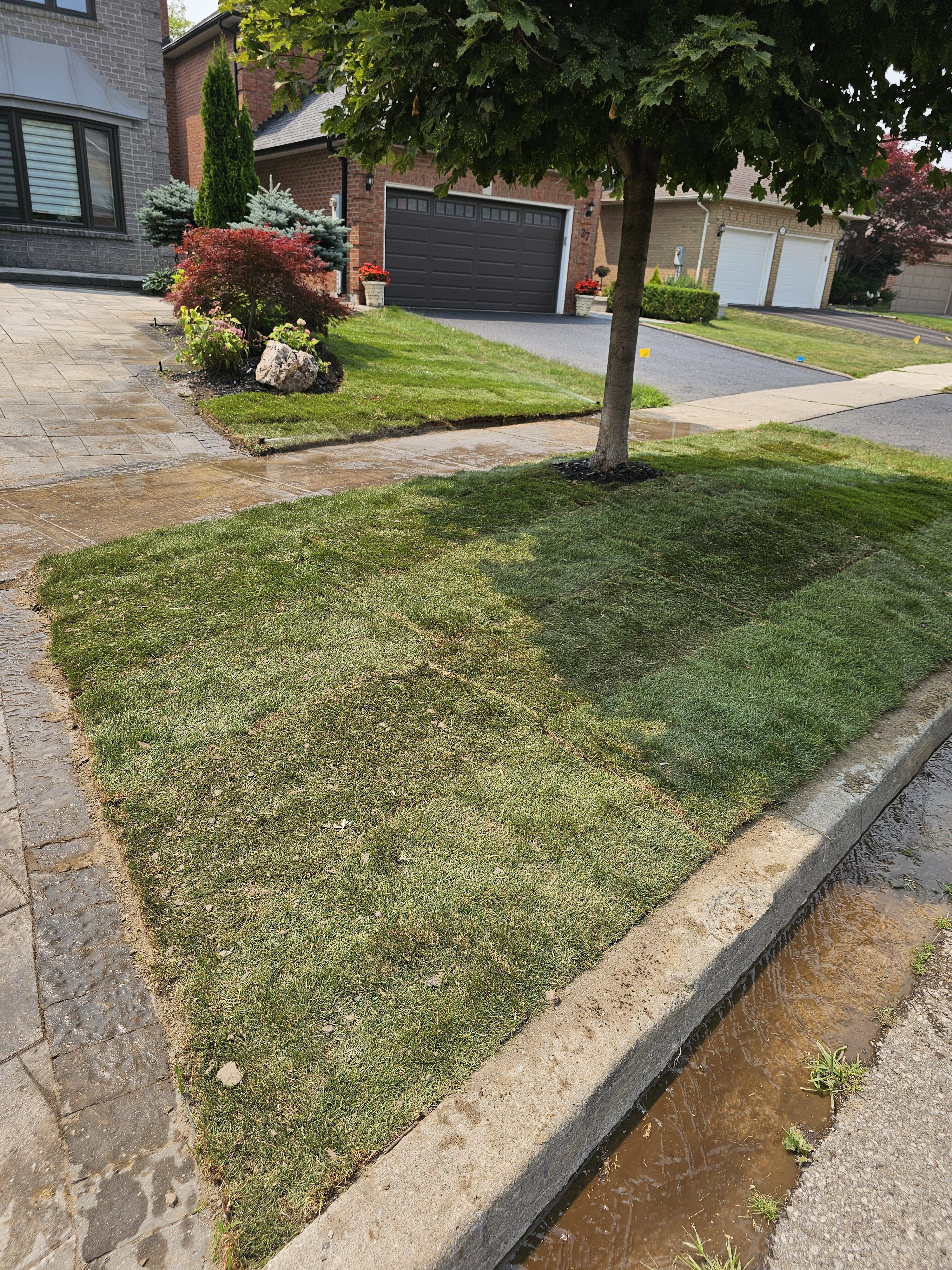
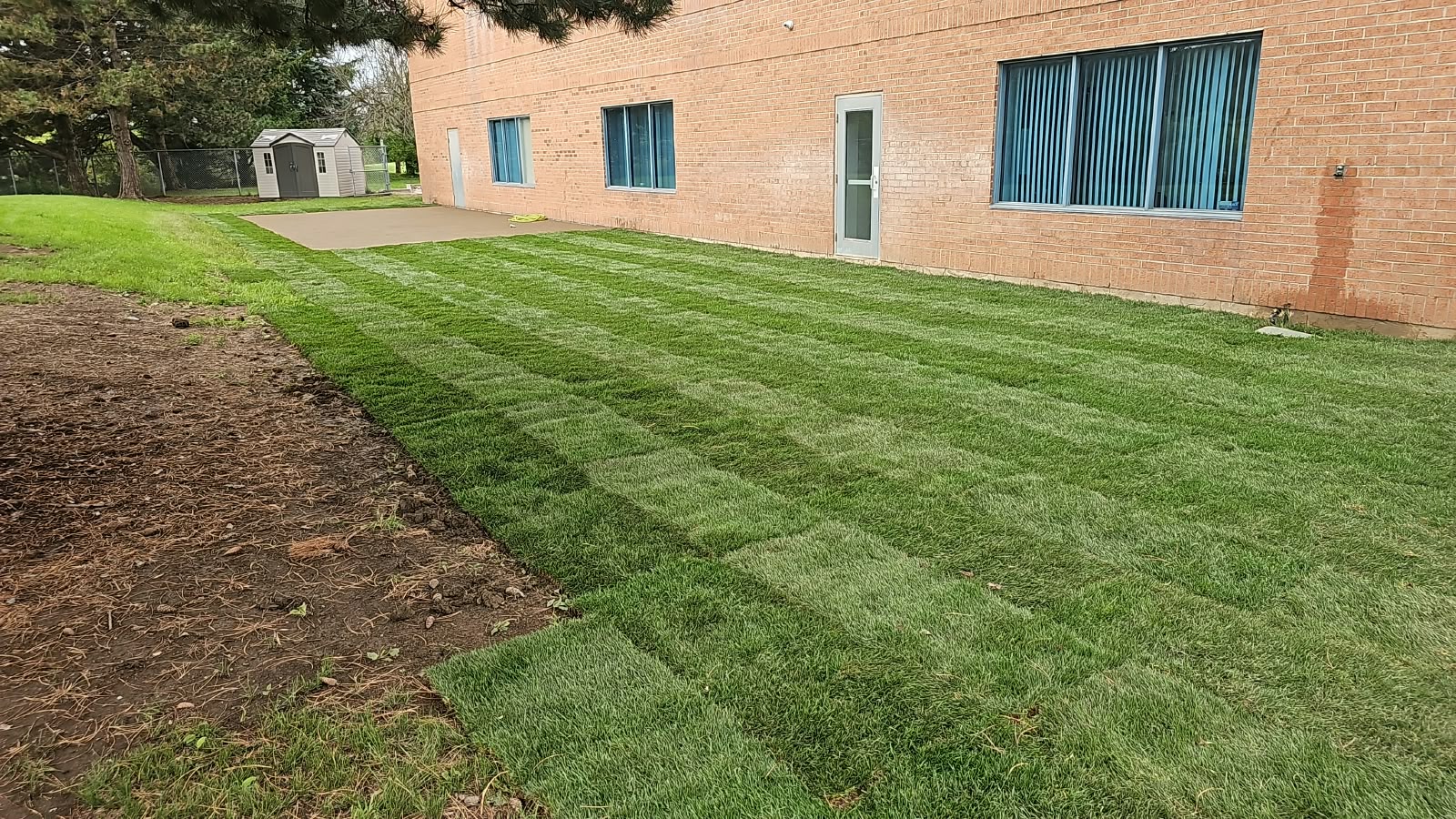
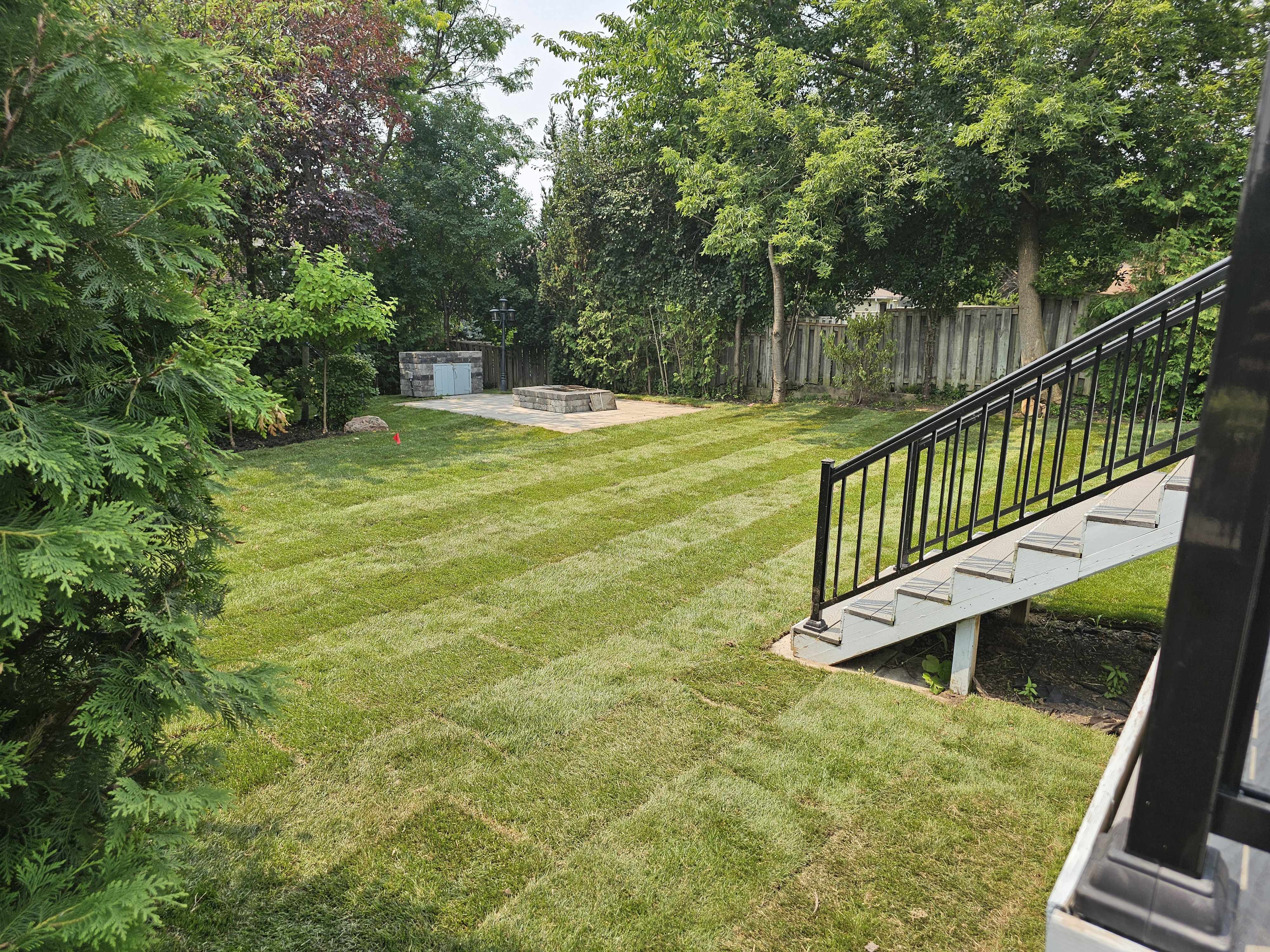
New sod puts down its first shallow roots in 10–14 days, and reaches full, deep rooting in about 4–6 weeks here in Ontario. Those first two weeks are when the sod “grabs” the soil enough to hold itself in place; the following month is when the roots drive down deep enough for the lawn to handle mowing, foot traffic, and dry spells on its own. That’s the whole answer — the rest of this guide is how to tell where your lawn is on that timeline, and how to keep it from falling behind.
How to check: the tug test
You don’t need to guess whether your sod is rooting — the sod will tell you. Walk to a corner of one roll, pinch the grass blades, and pull up gently. If the whole piece lifts like a rug, the roots haven’t grabbed yet. If it resists you — if you feel it holding onto the ground — it’s rooting. Simple as that. We tell every customer to do this instead of watching the calendar, because every lawn roots at its own pace depending on weather, soil, and watering.
The week-by-week rooting timeline
Here’s what a typical Ontario install looks like from the day we lay it to a fully established lawn. Your lawn may run a few days ahead or behind — use the tug test, not the calendar, as your final word.
| Timeframe | What’s happening | What you should do |
|---|---|---|
| Days 1–7 | The sod is living off the thin layer of soil it was cut with. Tiny white roots start reaching into your topsoil. | Water daily (2–3 times a day in heat). Stay off the lawn completely. |
| Days 8–14 | Shallow roots grab the soil. The sod starts resisting a gentle tug and the seams begin to knit together. | Keep watering daily. Light, careful steps only — no play, no pets, no wheelbarrows. |
| Weeks 2–3 | Rooting spreads across the whole piece. Grass gets noticeably taller. | Tug test. Once it resists, do your first mow with the blade set high. |
| Weeks 3–4 | Roots push deeper. The lawn stops looking like rolls and starts looking like a lawn. | Cut watering back to every 2–3 days, but water deeper each time. |
| Weeks 4–6 | Deep rooting completes. The sod is anchored and drawing water from well below the surface. | Normal foot traffic, normal mowing, 1–2 deep waterings a week. |
What slows rooting down
When sod takes longer than 6 weeks to root, it’s almost always one of these four things:
- Drought stress. This is the big one. If the soil under the sod dries out in the first two weeks, root growth stops dead — the plant goes into survival mode instead of rooting mode. Missing even one hot day of watering can set you back.
- Extreme heat. Above 30°C, sod loses water faster than shallow roots can replace it. It still roots in summer heat — we install all July and August — but only with disciplined watering. Our new-sod care guide has the full summer watering schedule.
- Compacted soil. Roots can’t push into ground that’s packed hard as a driveway. This is why proper prep — loosening the grade and adding fresh topsoil — matters as much as the sod itself. Sod dropped on hard clay can sit unrooted for months.
- Walking on it too early. Every footstep shifts the sod slightly and tears the fragile new roots that were just starting to grab. Two weeks of staying off it buys you a faster, stronger lawn.
When can I mow it for the first time?
First mow happens when the sod passes the tug test — usually around the 2–3 week mark. Set your mower blade high (7–8 cm) and make sure the lawn is dry when you cut; a heavy mower on soggy new sod leaves ruts. Never take off more than a third of the blade height in one cut. That first high mow actually helps rooting — it pushes the plant to put energy down into roots instead of up into leaves.
When is normal foot traffic OK?
Light, careful walking is fine after two weeks. Kids, dogs, soccer balls, and patio furniture should wait until the 4–6 week mark, when deep rooting is done. If you’re ever unsure, the tug test settles it — a lawn you can’t lift is a lawn you can walk on.
Does the season change the timeline?
In Ontario, yes — a little:
- Spring (April–June): the sweet spot. Warm soil, cool air, regular rain. Sod often roots on the fast end — shallow roots in 10 days, established in 4 weeks.
- Summer (July–August): roots just as well, but only if watering keeps up with the heat. Slack on water and the timeline stretches — or the sod fails outright.
- Fall (September–October): excellent rooting weather, and our favourite for Toronto sod installations. Cool air, warm soil, and morning dew mean less watering work for you. Late-fall installs (November) root enough to survive winter, then finish deep rooting the following spring.
The bottom line
Ten to fourteen days for the sod to grab, four to six weeks for a fully rooted lawn — and the tug test tells you exactly where you are along the way. Water like it’s your job for the first two weeks, stay off the grass, mow high once it holds, and you’ll be treating it like a normal lawn inside of six weeks. Thinking about a new lawn? Check our instant sod cost calculator to see what your yard would run.
We install sod right across the GTA — including Mississauga, North York and Markham — and everything above applies the same way on every job.
Get Your Free Sod Estimate
Most GTA lawns done in a single day — fresh-cut, fully guaranteed.
Get Your Free EstimateOr call us now: (416) 639-1794